Six Stages of Sustainability Thinking
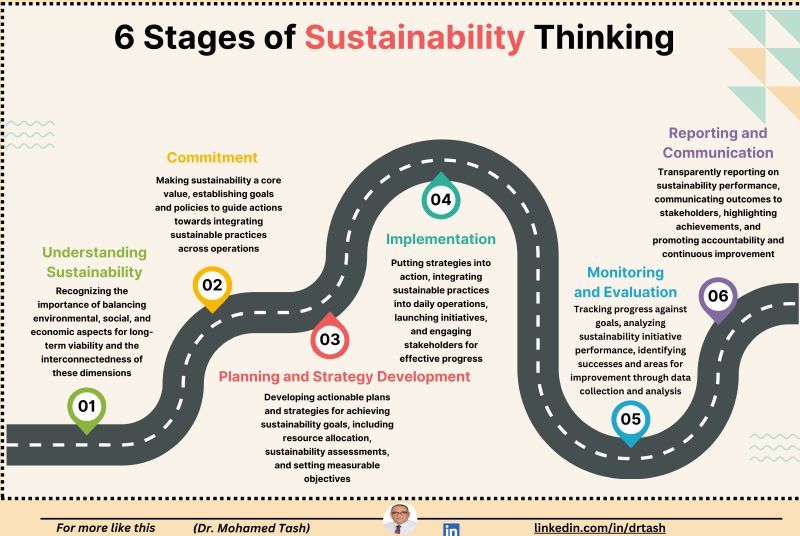
Six Stages of sustainability thinking
Credits to Dr. Mohamed Tash . Follow him for more sustainability content.
__________
Original post
📍Successful sustainability thinking often involves a systematic approach to integrating sustainable practices into all aspects of decision-making, aiming for environmental stewardship, social equity, and economic viability.
📍While various models exist, a common framework includes six stages:
1. Understanding Sustainability:
▪️This initial stage involves gaining a comprehensive understanding of what sustainability means, including its environmental, social, and economic dimensions. It’s about recognizing the interconnectedness of these aspects and the need for balance among them.
2. Commitment:
▪️At this stage, individuals, organizations, or governments commit to sustainability as a core value. This commitment involves setting sustainability goals and policies, which guide future actions and decisions. It’s about making a genuine pledge to integrate sustainable practices into operations, strategies, and daily life.
3. Planning and Strategy Development:
▪️ the focus shifts to developing actionable strategies and plans to achieve the set sustainability goals.
▪️This involves conducting sustainability assessments, identifying areas for improvement, and setting specific, measurable objectives. Planning also includes allocating resources and defining timelines for implementation.
4. Implementation:
▪️During this stage, the planned sustainability strategies and actions are put into practice.
▪️This involves integrating sustainable practices into daily operations, launching sustainability initiatives, and engaging stakeholders.
▪️Effective implementation requires coordination across departments or sectors and continuous monitoring of progress.
5. Monitoring and Evaluation:
▪️This stage involves tracking the progress of sustainability initiatives against the set goals and objectives.
▪️It includes collecting data, analyzing performance, and assessing the impact of sustainability efforts.
▪️Monitoring and evaluation help in identifying successes, challenges, and areas needing improvement.
6. Reporting and Communication:
▪️The final stage involves transparently reporting on sustainability performance and communicating the outcomes to stakeholders, including employees, customers, investors, and the wider community.
▪️Effective communication highlights achievements, shares best practices, and can motivate further action.
▪️It also ensures accountability and can enhance reputation.
📍Moving through these stages requires a dynamic and iterative process, as learning and adaptation are integral to successful sustainability thinking.
Source: https://lnkd.in/drc3NPic
__________
♻️ Find this post useful? Feel free to share it with your network 📣
👉Follow Sustainability Infographics 📊 to learn from the industry’s best visuals.
Source: