
Breaking Down Scope 1, 2, and 3 Emissions
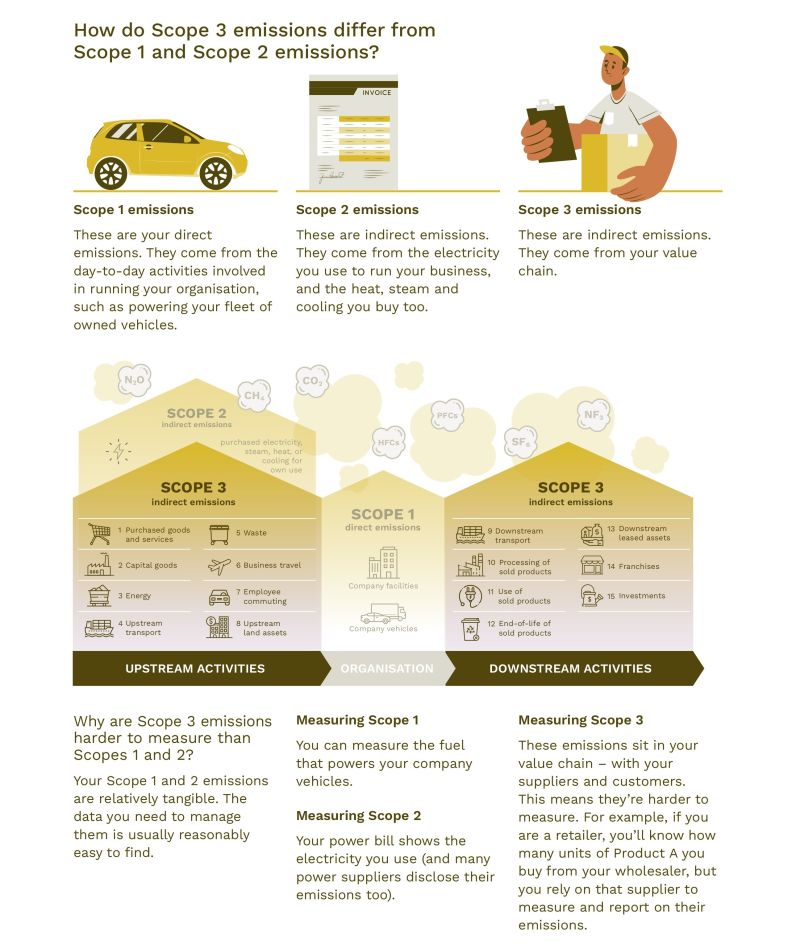
Understanding the distinctions between Scope 1, 2, and 3 emissions is essential for effective climate strategies. Scope 1 represents direct emissions from owned or controlled sources, such as fuel used in company vehicles. Scope 2 involves indirect emissions from purchased electricity, heating, and cooling. Scope 3 covers all other indirect emissions, including those across the value chain.
Scope 1 and Scope 2 emissions are generally easier to measure and manage. The data is often readily available through fuel usage records or electricity bills. These emissions are tangible and tied directly to organizational operations.
Scope 3 emissions, however, present a more significant challenge. They encompass upstream and downstream activities, such as supplier emissions, product transportation, and end-of-life disposal. This complexity makes Scope 3 the largest—and often least understood—portion of an organization’s carbon footprint.
Measuring Scope 3 emissions requires comprehensive data from suppliers, customers, and other stakeholders. This process often involves collaboration and a deeper level of transparency throughout the value chain. Despite the complexity, addressing Scope 3 emissions is critical for meaningful climate action.
Tackling Scope 3 emissions offers opportunities to innovate, enhance supply chain efficiency, and reduce environmental impact on a larger scale. Organizations that prioritize these efforts demonstrate leadership and contribute significantly to global decarbonization goals.
Source: Thinkstep
Source:


