
Understanding GHG emissions
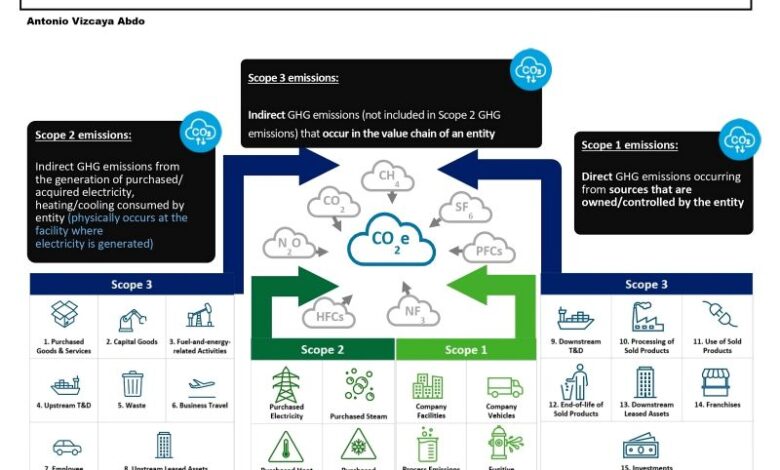
Understanding a company’s carbon footprint isn’t as simple as just counting what comes out of its own smokestacks. To get the full picture, you have to look at the entire value chain. This is where the three different scopes of greenhouse gas (GHG) emissions come in, and understanding them is no longer just a technical exercise it’s a strategic imperative.
Scope 1: The Direct Impact
Think of Scope 1 emissions as the ones you can see and touch. They are the direct emissions from sources a company owns or controls. This includes things like emissions from manufacturing plants, company vehicles, or even a company jet. They are the easiest to measure and control because they happen right there, on-site.
Scope 2: The Energy You Buy
Scope 2 emissions are the indirect emissions from the energy a company buys. While the pollution is generated at an off-site power plant, it’s a direct result of the company’s demand for electricity, heating, or cooling. These emissions are a bit like your electricity bill you’re not generating the power, but your usage is creating the demand for it.
Scope 3: The Full Picture
This is where things get complicated. Scope 3 emissions are all the other indirect emissions that occur across a company’s entire value chain. They are often the largest source of a company’s carbon footprint. This includes everything from the raw materials a company buys to the way customers use and dispose of its products. It’s the emissions from business travel, employee commuting, and even the waste generated at a company’s facilities.
Addressing Scope 3 is a massive challenge, but it’s also a huge opportunity. Because these emissions are so spread out, solving them requires collaboration and innovation across the entire supply chain. It’s about working with suppliers to find greener alternatives, partnering with logistics companies to optimize shipping routes, and educating customers on how to use and dispose of products more sustainably.
Ultimately, companies that take the time to measure and reduce emissions across all three scopes aren’t just doing their part for the planet; they’re building more resilient and competitive business models for the future. They’re preparing for evolving regulations, meeting investor expectations, and demonstrating a genuine commitment to a sustainable future.
source:


