
1.5°C vs 2°C: Why Every Fraction of a Degree Matters
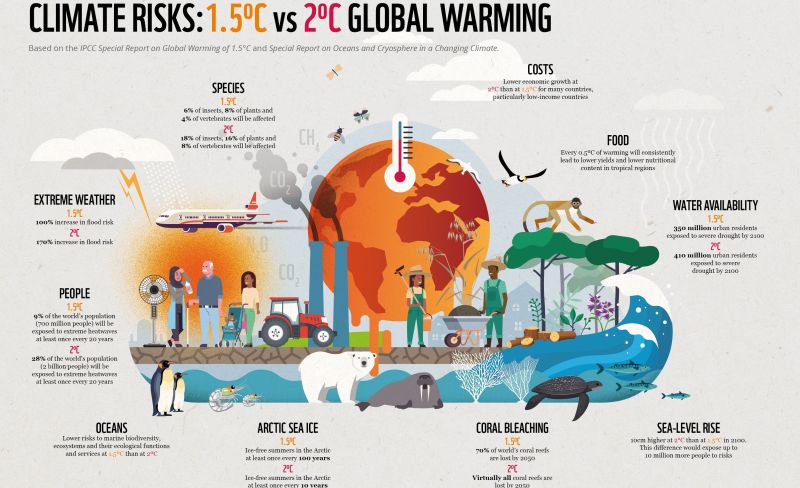
The difference between 1.5°C and 2°C of global warming may sound small—but the impacts are massive and devastating.
🔸 Species: At 1.5°C, 6% of insects, 8% of plants, and 4% of vertebrates face risks. At 2°C, those numbers triple for insects and double for plants, threatening entire ecosystems.
🔸 Extreme Weather: Flood risk rises by 100% at 1.5°C — at 2°C, it jumps to 170%, meaning storms, floods, and disasters will be far more frequent and severe.
🔸 People: At 1.5°C, 700 million people face extreme heatwaves every 20 years. At 2°C, nearly 2 billion people are affected—one in four globally.
🔸 Water & Food: By 2100, 350 million urban residents face severe drought at 1.5°C. At 2°C, that rises to 410 million. Crop yields and nutrition drop with every 0.5°C of warming.
🔸 Oceans & Ice: Arctic summers are ice-free once every 100 years at 1.5°C; at 2°C, it occurs every 10 years. Coral reefs? 70% lost by 2050 at 1.5°C, nearly all gone at 2°C.
🔸 Sea Level Rise: An additional 10 million people face flooding risks if warming reaches 2°C.
The takeaway: Half a degree is not small—it’s the difference between survival and collapse.
Urgent global action is needed: stronger policies, corporate accountability, and individual responsibility.
How can businesses and communities contribute to keeping global warming below 1.5°C?
Jessica ZefeldtStefan WladarschSharon L.Vesselina RaltchevaSusan Jasko
Source:


