
10 Sustainable development finance with carbon credits
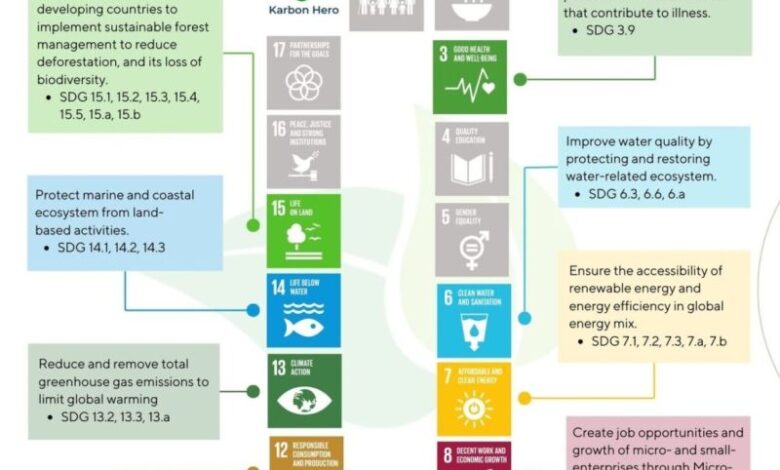
The Regeneration Economy: Financing the SDGs with Carbon as Currency
The climate challenge is not just an environmental problem; it’s a global investment opportunity. For too long, organizations viewed emission reduction as a cost a compliance hurdle on the path to net-zero. But a new vision is emerging where the voluntary carbon market isn’t about offsetting a debt; it’s about funding a future a future defined by the UN’s Sustainable Development Goals (SDGs).
Green financing, powered by high-integrity carbon credits, is the most dynamic lever we have to accelerate this transformation. When an organization purchases a verified carbon credit, they are doing far more than neutralizing a ton of CO2. They are making a direct, measurable investment in community prosperity, biodiversity, and planetary health. They are moving from a state of neutrality to one of net-positive impact.
The 10 Ripples of Transformative Carbon Finance
Strategic carbon investments act like a stone dropped into the water, creating ten powerful, interconnected ripples across the global development agenda:
- Life on Land (SDG 15): Funding the guardians of our planet. Credits restore mangroves, protect vital rainforests, and replenish land, safeguarding the natural capital that sustains us all.
- Clean Water & Sanitation (SDG 6): Reforestation projects act as nature’s water filters, securing watersheds, enhancing water quality, and ensuring reliable, clean access for communities.
- Affordable & Clean Energy (SDG 7): Carbon finance de-risks and accelerates the deployment of renewable energy—from solar microgrids to wind farms bringing clean, reliable power to energy-poor regions.
- Good Health & Well-being (SDG 3): By replacing polluting cookstoves and reducing industrial emissions, these projects deliver the immediate, life changing benefit of cleaner air and healthier communities.
- Industry, Innovation & Infrastructure (SDG 9): Capital is channeled into the cutting-edge: low-carbon technologies, sustainable transport, and resilient infrastructure that define the green economy of tomorrow.
- Life Below Water (SDG 14): “Blue carbon” initiatives, such as protecting coastal ecosystems, become economically viable, defending our oceans and coastal communities against climate threats.
- Decent Work & Economic Growth (SDG 8): Green projects are job creation engines, training and employing local people in restoration, maintenance, and the creation of inclusive, resilient economies.
- Sustainable Cities & Communities (SDG 11): Funding is directed toward smarter urban planning, efficient waste-to-energy solutions, and expanded green spaces, making cities more liveable and equitable.
- Responsible Consumption & Production (SDG 12): Investments support the transition to circular economic models, minimizing waste, optimizing resource use, and setting a new standard for corporate stewardship.
- Climate Action (SDG 13): The foundational goal every verified credit is a tangible victory in the fight against climate change, simultaneously reducing emissions and building local climate resilience.
Carbon is the new asset class for regeneration. It is the powerful bridge that connects a company’s climate ambition directly to the realization of global development goals. When we invest in carbon credits strategically, we are not just meeting a target; we are financing regeneration, catalyzing a future that is not merely sustainable, but truly abundant.
The path forward is clear: Move beyond neutrality. Invest in impact.
source:


