Type of carbon explained
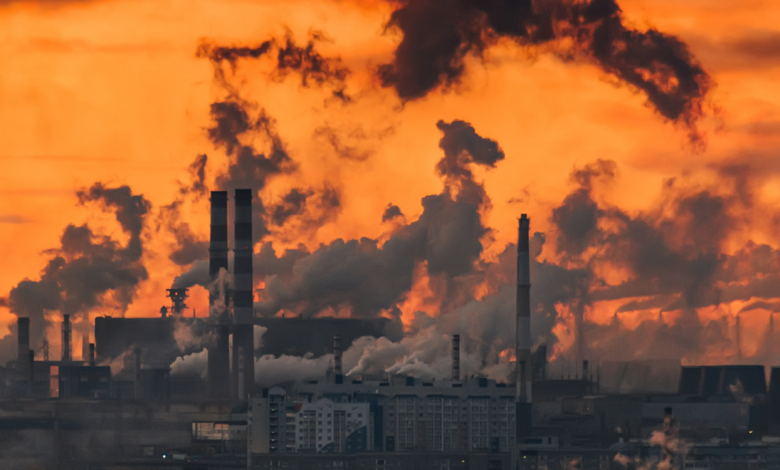
A Strategic Taxonomy of Climate Risk and Resilience
In the boardroom, “carbon” is often reduced to a single metric: CO2e. However, for the climate scientist and the sophisticated ESG investor, carbon is a multidimensional spectrum. Understanding the chromatic taxonomy of carbon from the soot in the air to the seagrass in the ocean is the difference between a superficial sustainability report and a robust, future-proofed climate strategy.
The Warming Accelerants (Atmospheric Carbon)
These forms of carbon do not just linger; they actively “superheat” the atmosphere. They are the primary targets for rapid-response mitigation.
Black Carbon (The Soot Factor)
- Origin: Incomplete combustion (diesel, industrial flares, cookstoves).
- The Danger: It is a “Short-Lived Climate Pollutant” (SLCP). While it stays in the air for only days, its warming impact is up to 1,500 times stronger than CO2 .
- Albedo Crisis: When it settles on Arctic ice, it turns white surfaces black, absorbing heat and triggering a terminal melt loop.
Brown Carbon (The Wildfire Feedback)
- Origin: Biomass burning and organic aerosols.
- The Danger: As global wildfires increase in frequency, brown carbon creates a feedback loop—trapping solar radiation and further drying out forests, leading to even more fires.
The Natural Fortresses (Sequestration Carbon)
These represent “Nature-Based Solutions” (NbS). They are the world’s most efficient carbon sinks and the darlings of the high-quality voluntary carbon market.
Blue Carbon (The Coastal Powerhouse)
- Origin: Mangroves, seagrasses, and salt marshes.
- Strategic Value: These ecosystems can sequester carbon 40 times faster than terrestrial forests.
- The Multiplier: Beyond carbon, Blue Carbon assets provide coastal storm protection and support 50% of global fisheries, offering massive “co-benefits” for ESG reporting.
Green Carbon (The Terrestrial Anchor)
- Origin: Photosynthetic carbon stored in forests, grasslands, and soil.
- Strategic Value: This is the bedrock of regenerative agriculture. Healthy soil is the second-largest carbon store on Earth after the ocean.
The Albedo Disruptors & Industrial Drivers
Red Carbon (The Biological Melt)
- Origin: Deep-red pigmented algae blooming on snow and glaciers.
- The Danger: Often overlooked in corporate models, red carbon darkens the “Earth’s Mirror.” By reducing reflectivity, it accelerates glacial retreat, directly impacting global sea-level rise projections.
Grey Carbon (The Legacy Emissions)
- Origin: Fossil fuel-heavy industrial output.
- Strategic Value: This is the “Scope 1 & 2” inventory. It is the target of the global energy transition. Reducing grey carbon is the baseline for achieving Net Zero.
Strategic Matrix: Carbon Types vs. Business Action
| Carbon Type | Impact Velocity | Strategic Response | ESG Reporting Focus |
| Black/Brown | Immediate | Supply Chain Decarbonization | Air Quality & Public Health |
| Blue/Green | Long-term | Investment in Nature-Based Offsets | Biodiversity & Resilience |
| Red | Feedback Loop | Climate Risk Modeling | Physical Asset Protection |
| Grey | Sustained | Energy Transition & Efficiency | Net-Zero Pathways |
Moving Beyond “One-Size-Fits-All”
To lead in the 2026 climate economy, organizations must evolve their carbon vocabulary:
- Stop counting, start categorizing: A ton of Grey Carbon avoided through solar is good; a ton of Blue Carbon protected in a mangrove is a strategic masterpiece due to its biodiversity co-benefits.
- Mitigate the “Short-Lived” Warmers: Reducing Black Carbon offers the fastest possible ROI for the planet’s temperature.
- Model the Albedo Risk: If your supply chain relies on Himalayan or Arctic water, “Red Carbon” is a financial risk to your operations.
Carbon is not a uniform enemy; it is a complex system. By mastering the spectrum, businesses can transform climate compliance into a competitive advantage.
source:
https://onestopesg.com/esg-news/types-of-carbon-explained-1766428267575