Indonesia turn coconuts
Turning Waste into Wealth Starts with One Idea.
Every year, millions of tons of agricultural waste are discarded or burned, contributing to pollution and greenhouse gas emissions. Yet what many see as waste can actually become a valuable resource for building a more sustainable future.
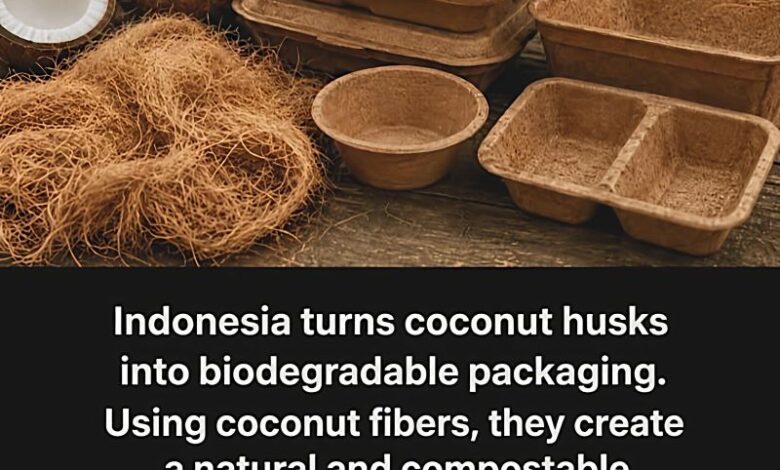
One inspiring example comes from Indonesia, where coconut husks once considered little more than agricultural waste are being transformed into biodegradable packaging. Instead of ending up in landfills or being openly burned, these natural fibers are processed into eco-friendly alternatives that can replace single-use plastic in various applications. This innovation demonstrates the principles of a circular economy: keeping materials in use for as long as possible, reducing waste, and creating new economic opportunities from resources that would otherwise be discarded. Now imagine the possibilities for India.
As the world’s largest producer of coconuts and one of the largest agricultural economies, India generates enormous quantities of agricultural residues every year. By investing in biodegradable packaging made from coconut husks and other crop by-products, the country has the opportunity to:
- Reduce dependence on single-use plastics and lower plastic pollution.
- Minimize agricultural waste while cutting emissions from open burning.
- Create new income streams for farmers by adding value to agricultural residues.
- Support green manufacturing and encourage innovation in sustainable materials.
- Generate new jobs across collection, processing, manufacturing, and distribution.
- Contribute to climate action by replacing fossil fuel-based packaging with renewable, biodegradable alternatives.
The transition to sustainable packaging is not simply an environmental choice it is also an economic opportunity. As consumers, businesses, and governments increasingly seek environmentally responsible products, demand for biodegradable packaging is expected to continue growing. The future of packaging doesn’t have to rely on plastic. It can be renewable, biodegradable, and created from materials that nature already provides.
The future is not plastic. The future is sustainable.
Let’s support innovation, empower farmers, reduce waste, and help build a cleaner, more resilient future for generations to come.
source: