The Plastic We Don’t See
The Plastic We Don’t See
Microplastics are no longer just a pollution problem—they are a circular economy challenge.
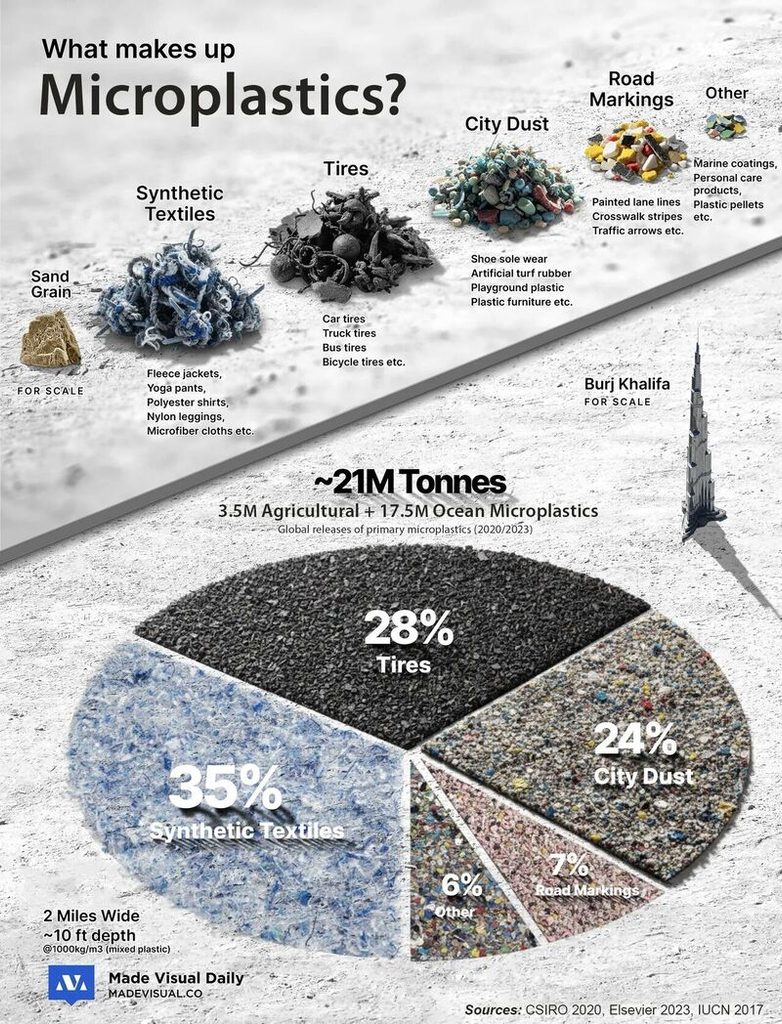
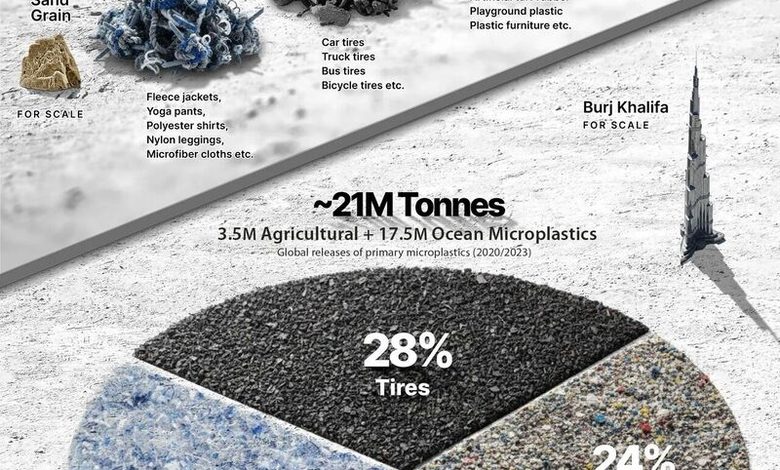
Everyday systems quietly generate enormous amounts of microscopic plastic pollution. Tires shed particles onto roads. Synthetic textiles release fibers through washing and wear. City dust, road markings, coatings and countless plastic products add to the flow.
The scale is striking: global releases of primary microplastics were estimated at ~21 million tonnes, from agricultural and ocean sources.
The bigger question is not simply “Where do microplastics go?”
It is:
Why are valuable materials being designed to become pollution?
A truly circular economy must rethink products from the beginning—durable materials, responsible design, safer alternatives, better filtration, smarter infrastructure, and systems that keep materials in use rather than letting them fragment into the environment.
Circularity means more than recycling.
It means preventing waste and pollution by design.
The future of materials must be measured not only by what we produce—but by what we leave behind.