ASB S-SEA shares seger waras programme lessons with ASEAN-PRIME delegates in Girisuko
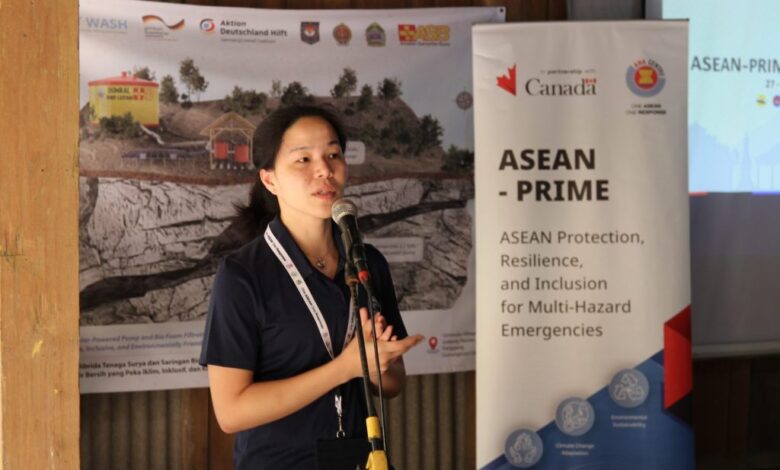
“Seger Waras” Program in Girisuko Becomes a Regional Model for Water Crisis and Disaster Management for ASEAN Delegates
Best practices from Kalurahan Girisuko, Gunungkidul, in overcoming a decade-long clean water crisis have officially become a role model for the Southeast Asian region. Through the Cross-Learning Exchange 3 (CLE 3) organized by ASEAN-PRIME, regional delegates visited the site to directly observe the success of the Seger Waras program as a blueprint for community-based disaster management and climate resilience.
This field visit was initiated by Arbeiter-Samariter-Bund South and South-East Asia (ASB S-SEA), bringing together representatives from:
- ASEAN Committee on Disaster Management (ACDM Working Groups).
- The ASEAN Secretariat & The AHA Centre.
- The Embassy of Canada to Indonesia.
Background: Water Crisis in the Karst Terrain of Girisuko
Padukuhan Gebang in Kalurahan Girisuko is located on karst terrain, where nearly 80% of the land consists of state forest. This condition creates an environmental paradox:
- Abundant Rainfall vs. Severe Drought: Rain falls in abundance, yet water vanishes underground within hours.
- Severe Impact: Since 2010, residents have endured recurring droughts, spikes in diseases (diarrhea and respiratory infections), failed harvests, and social conflict over resources.
- Financial Burden: Left unaddressed, the 192 households in Girisuko would need to spend an estimated Rp345.6 million every dry season just to purchase clean water.
The “Seger Waras” Initiative and ASEAN-PRIME Collaboration
The Seger Waras program is part of the global ECT WASH initiative implemented across 14 countries, supported by the German Federal Foreign Office (GFFO) and Aktion Deutschland Hilft (ADH).
This location was selected by ASEAN-PRIME—a five-year initiative (2022–2027) funded by the Government of Canada (DFATD) and managed by the AHA Centre to integrate three core pillars into ASEAN’s regional disaster management systems:
- Protection, Gender, and Inclusion (PGI).
- Climate Change Adaptation (CCA).
- Environmental Sustainability (ES).
3 Key Learning Pillars from the Field
During parallel discussion sessions held at the pendopo of local resident Pak Aan, delegates explored three technical and implementation topics:
1. Seger Waras Nexus Programming
- Focus: Connecting climate action, disaster risk reduction, anticipatory action, and nature-based solutions.
- 4 Core Pillars: Climate-sensitive water and sanitation services, community-based anticipatory action, nature-based/renewable energy solutions, and policy advocacy spanning village to district governments.
2. Climate-Resilient Water Security & Management
- Technological Innovation: Utilization of a solar-grid hybrid pumping system to extract water from the underground Wuluh Kumet source at a depth of 42 meters.
- Social Empowerment: Community-driven infrastructure construction, where 60% of the physical labor was contributed by elderly residents.
3. Inclusive Anticipatory Action
- Operational Framework: Shifting the paradigm from reactive disaster response to proactive anticipation prior to drought onset, powered by weather forecasts and pre-positioned funding.
- Four Escalation Levels: Structured across four trigger levels (Normal, Alert, Standby, Beware), each with defined indicators, thresholds, and early action responses.
- Inclusion Principles: Communication strategies are tailored to ensure that the most at-risk groups (persons with disabilities, elderly, women) receive information, protection, and equal support without exception.
Key Quotes
“I think most of us here would take something away and bring it home to our respective hometowns. We will contextualize the lesson learned and apply it where relevant.”
— Jennyline Fan, Participant of ASEAN-PRIME CLE 3.
“Physical infrastructure can be built in a matter of months, but resilience only forms when communities are fully empowered to adapt and care for their own resources. Infrastructure is the tool; the community is the operating system.”
— Irwan Dwi Jarwanto, Head of Planning (Pangripta), Kalurahan Girisuko.
“The program has proven that safe water access in Padukuhan Gebang, Girisuko—once a generational dream—can become reality through collaborative efforts between the community, local governments, and international partners.”
— Chrysant Lily Kusumowardoyo, Regional Director of ASB S-SEA.
All insights and findings gathered during this field visit to Girisuko will be compiled into the CLE 3 Report. The document will be submitted to the ACDM Working Group on Prevention and Mitigation via the ASEAN Secretariat and the AHA Centre, serving as a valuable knowledge base for disaster management practices across Southeast Asia.
source: