Blog: Indonesia wants a carbon tax, but with subsidies?
Indonesia’s Carbon Tax: A Path to a Sustainable Future?
Indonesia is at a crossroads. As a nation highly vulnerable to the impacts of climate change, the government is looking for new ways to combat the crisis. One of the most promising ideas on the table is a new carbon tax. But will it be a game-changer or just another policy with good intentions?
The concept is simple: by making it more expensive to pollute, the government can encourage companies and individuals to reduce their carbon emissions. The revenue generated from the tax would then be reinvested into climate-friendly initiatives. It’s a “double dividend” that could not only cut emissions but also fund a transition to a cleaner economy. This new tax is part of a broader strategy, which includes an emissions trading scheme, and has already received positive signals from parliament.
So, How Would It Work?
The proposed tax is still in its early stages, but the current draft is ambitious. It would apply to both companies and individuals, covering a wide range of products and activities that produce carbon emissions, from buying fossil fuels at the pump to power plants and industrial processes.
The tax rate would be flexible, mirroring the carbon market price, with a floor of at least Rp 30 (about $0.002) or $2 per ton of CO2e. To put this in perspective, Singapore’s carbon tax is currently $3.70 per ton, while Sweden’s, one of the highest in the world, is a whopping $126 per ton. This shows that Indonesia has plenty of room to grow its tax rate over time.
A Phased and Thoughtful Approach
For the carbon tax to be successful, it must be rolled out carefully. The current plan is to prioritize certain sectors, with the energy sector likely to be the first target. This is a smart move since it’s the second-largest emitter and is relatively easier to tax than, say, the land-use sector. The government has a clear roadmap to create a “carbon tax and carbon market roadmap” for approval by the parliament.
The carbon tax isn’t a silver bullet. It’s one tool in a larger toolkit of environmental policies. It’s crucial that the government clarifies how this tax will complement other efforts to drive down emissions and accelerate renewable energy. The tax proceeds could be used to finance major climate-resilient infrastructure, like smart grids for large-scale renewable electricity or energy efficiency retrofits for public buildings.
Carrots and Sticks: A Powerful Combination
To avoid a backlash, the carbon tax should be paired with incentives that reward low-carbon alternatives. Think of it as a “carrot and stick” approach. Industries and the public often push for incentives instead of taxes, but the two work best when they work together.
A great example of this is Sweden, which gradually increased its carbon tax while simultaneously lowering other taxes, like income and corporate taxes. This strategy was key to reducing Sweden’s emissions while maintaining strong economic growth.
In Indonesia, “carrots” could come in the form of tax incentives for households and companies that install solar panels, switch to electric vehicles, or use more energy-efficient technologies. These incentives could be funded by the carbon tax revenue, helping to neutralize any negative economic burden and further support the country’s climate goals.
The Biggest Hurdle: Fossil Fuel Subsidies
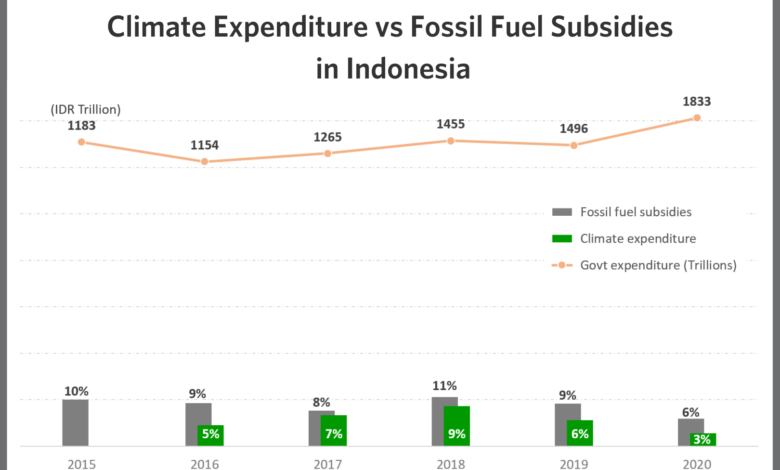
Here’s the tricky part: Indonesia still heavily subsidizes fossil fuels like diesel, kerosene, and coal-powered electricity. This creates a major conflict. If a carbon tax is applied to coal production, but the government continues to subsidize coal-powered electricity, the cost increase is simply absorbed by the state. Essentially, the government would be paying a “carbon premium” to itself.
These subsidies also make it difficult for renewable energy to compete, even though technologies like solar are now cheaper than new coal or gas plants in most countries.
The subsidies create an uneven playing field, slowing the transition to renewables.
Phasing out these subsidies is a critical step. The National Planning and Development Agency (BAPPENAS) has already called for a full rollback of fuel subsidies by 2030, coupled with a carbon tax. This would be a massive reform, similar to the one in 2015.
The money saved from these subsidy rollbacks and generated from the carbon tax could be redirected to people in more direct ways, such as:
- Health insurance premiums
- School coupons
- Targeted cash handouts
History shows that such reforms can be met with resistance from both industry and citizens. However, with a clear vision and a well-thought-out plan, Indonesia can successfully navigate this transition. The government must clearly show how these changes will lead to a more prosperous, inclusive, and resilient economy.
source:
https://www.climatepolicyinitiative.org/blog-indonesia-wants-a-carbon-tax-but-with-subsidies/