Cancellation of Cirebon-1 power plant’s early retirement casts a cloud over Indonesia’s climate ambitions
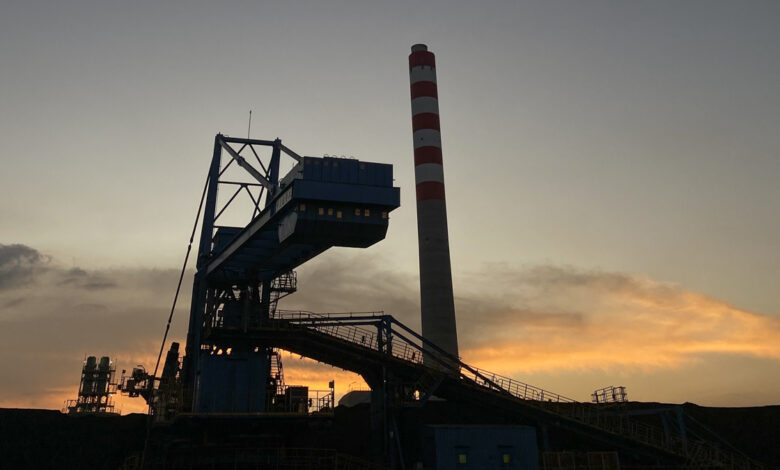
It was to be the first coal-fired plant shut down early, specifically for climate, with funding support from international donors, private financiers, and multilateral development banks. Moreover, once finalized, it could serve as a model for financing the retirement of other similar, younger coal plants in Indonesia, and elsewhere in Asia, and replace their generation with renewables.
But last week, what many feared became official — the planned early retirement of the 660 megawatt (MW) Cirebon-1 coal-fired power plant in West Java, Indonesia, would be canceled due to its long-remaining operational life.
Presidential backpedaling and mixed messages
It’s the latest in a series of moves that put into question President Prabowo Subianto’s commitment to meeting Indonesia’s net-zero and climate targets. Earlier this year, the government released the country’s latest electricity supply plan, the Rencana Umum Perencanaan Tenaga Listrik (RUPTL), calling for a 40% increase in power generation from coal and fossil gas between now and 2034, which many saw as a disappointing step back from previous commitments. The country’s new sovereign wealth fund, Danantara, is also looking to invest in downstream coal applications such as coal-to-chemicals.
It’s the latest in a series of moves that put into question President Prabowo Subianto’s commitment to meeting Indonesia’s net-zero and climate targets.
“There have been inconsistencies,” said Tiza Mafira, director at the Climate Policy Initiative in Indonesia. “Whereby renewable energy seems to have a lot of support in plans and roadmaps, with ambitious targets, however, at the same time, policies are also supportive of coal, as an incumbent and dominant energy source.”
All together, these moves are increasing fears that coal will remain in Indonesia’s future for years to come — and that expanding alternatives, like wind and solar, will continue to lag neighboring countries like Vietnam, India, and Thailand.
“Canceling the early retirement plan for Cirebon-1 will slow the energy transition and hinder decarbonization of the electricity sector,” said Uliyasi Simanjuntak, a spokesperson with the
Jakarta-based think tank Institute for Essential Services Report (IESR).
Cirebon as JETP’s flagship project
Since 2012, Indonesia’s coal-fired thermal power fleet has expanded immensely, with funding primarily from China, Korea, and Japan. Because so much of this fleet is still considered young, there is a clear role for international financing to enable early retirements while supporting clean alternatives.
Despite its moderate ambition, it was seen by many as a potential model for the country.
The Just Energy Transition Partnership with Indonesia, announced to much fanfare in November of 2022, was intended to fill this role. Through a $20 billion deal entered by Indonesia, G7 countries represented by the US and Japan, and the International Partners Group (IPG), JETP promised to accelerate the coal-dependent country’s decarbonization and the expansion of renewables. It followed a similar deal with South Africa in 2021.
“Early coal retirement was one of the focus areas of the JETP, and this one flagship project that was meant to be the pilot,” said Tiza. “People looked to this project as an indication if this investment focus area would be a success. Its cancellation does not bode well for other coal plant retirements that might come into the pipeline.”
The Cirebon-1 plant opened in 2012 and is jointly owned by Japan’s Marubeni, South Korea’s KEPCO, and Indonesia’s PT Indika Energy. The plan, led by the Asian Development Bank, was to retire the plant in 2035, just seven years ahead of its planned retirement year of 2042. Despite its moderate ambition, it was seen by many as a potential model for the country. If successful, it could enable early retirement of other similar coal-fired power plants.
“The reluctance of the government and PLN to proceed with the early retirement of coal-fired power plants reflects a weakening commitment to the energy transition,” said Fabby Tumiwa, the CEO of IESR. He fears Indonesia will pay in the long term.
“Our analysis found that the economic benefits of early coal retirement, such as subsidy savings, reduced risks, and lower health costs, are actually two to four times greater than the retirement costs themselves,”
“Our analysis found that the economic benefits of early coal retirement, such as subsidy savings, reduced risks, and lower health costs, are actually two to four times greater than the retirement costs themselves,” said Fabby.
JETP’s progress, at snail’s pace
Progress under JETP has been slow. The initial Comprehensive Investment and Policy Plan was delayed, only being released in late 2023. Then, this year, the US announced it would be withdrawing, just months after President Donald Trump returned to the White House,
However, it was not, as feared, the end of JETP. Germany stepped into the US role to co-lead the program with Japan, alongside the IPG.
One thing hasn’t yet changed despite Germany’s new role — slow progress. The latest JETP progress report, released in October, failed to address concerns about captive coal loopholes or how to scale up coal retirements, says Katherine Hasan, an Indonesia-based analyst with the Centre for Research on Energy and Clean Air.
Related reading:
Who, and what, is behind Indonesia’s climbing coal use?
Asia’s $6.3 billion climate blind spot
China needs to clean up its clean-energy supply chain
“The report not only fails to address Indonesia’s rapidly expanding coal power capacity — it effectively dismantles the country’s coal moratorium via persisting loopholes, reliance on dubious carbon-reduction mechanisms, and a loose green taxonomy that allows ample space for coal-based activities,” said Hasan.
Signs of progress, shifting focus
Interestingly, just last week, JETP rolled out a comprehensive report on Indonesia’s problem of “captive coal” — which is the coal-power generated by private industries for their own use. Captive coal plants, most far from retirement age, account for most captive power in Indonesia, which is about one-quarter of the country’s generating capacity. That could be a signal that the country will try to address a major loophole.
There are still some other positive signs, says Tiza.
“There are plans now to have the JETP become more embedded in government bureaucracy, through the JETP delivery unit, so that’s a positive update and progress,” said Tiza.
Chief Economic Minister, Airlangga Hartarto [says] the government is reviewing other coal-fired power plants for early shutdown, focusing on “older, dirtier” ones.
There is still some hope for other coal retirements. The government has said it still plans to achieve its 2050 net-zero targets, and according to the country’s Chief Economic Minister, Airlangga Hartarto, the government is reviewing other coal-fired power plants for early shutdown, focusing on “older, dirtier” ones. Tiza hopes to see more details on that.
“We have not seen any old coal plants being naturally retired as of today, instead, they’ve been retrofitted and extended. If the government wants to do natural retirement, it has to prove that it’s serious by actually doing that,” said Tiza.
For Fabby, the key concern is that this retirement shows Indonesia is not serious. And the longer it takes to shift away from coal, the harder it will be for renewables to get financing and expand.
“Canceling the early retirement of the Cirebon-1 coal-fired power plant would undermine efforts to accelerate the shutdown of other coal plants in Indonesia through the ETM or blended finance mechanism, thereby weakening, not strengthening, Indonesia’s green energy transition,” said Fabby.
Featured image: Cirebon-1 power plant
Indonesia’s flagship JETP coal shutdown project shuts down