Cooling Cities Starts with Better Design
Cooling Cities Starts with Better Design
As heatwaves become more frequent and intense, cities need more than air conditioning—they need smarter infrastructure.
The future of urban cooling lies in Green-Blue-Grey Infrastructure (GBGI), an integrated approach that combines nature, water, and engineered solutions to reduce temperatures, improve resilience, and create healthier communities.
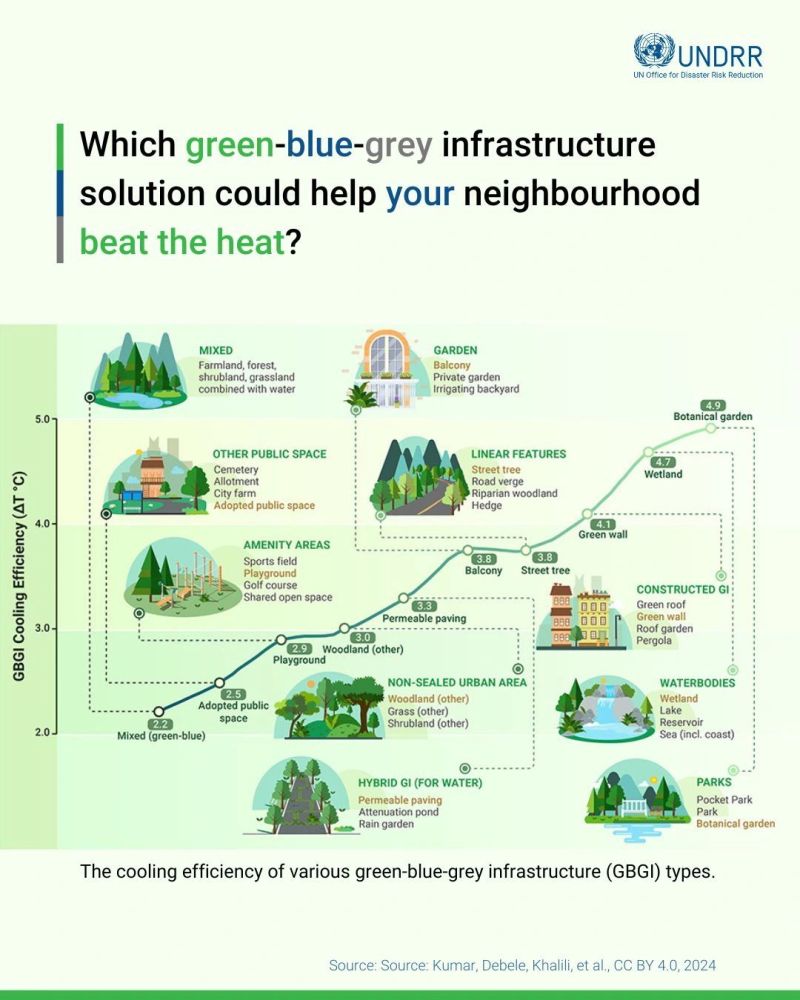
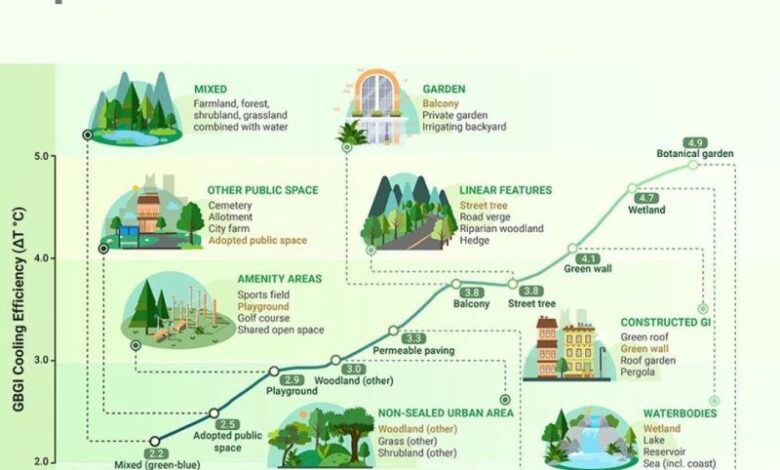
Research shows that different GBGI solutions can significantly lower urban temperatures:
🌳 Botanical gardens and large parks deliver some of the strongest cooling effects by increasing shade and evapotranspiration.
💧 Wetlands, lakes, and other water bodies help regulate local temperatures while supporting biodiversity and reducing flood risks.
🌿 Green walls, street trees, and urban forests cool neighborhoods, improve air quality, and make public spaces more comfortable.
🏡 Green roofs, rain gardens, permeable pavements, and private gardens reduce heat absorption, manage stormwater, and strengthen climate resilience.
The message is clear: no single solution can eliminate urban heat. But together, green, blue, and grey infrastructure can transform cities into places that are cooler, healthier, and better prepared for a changing climate.
Designing climate-resilient cities is no longer just an environmental goal—it is a public health, economic, and social priority.
Every tree planted, every wetland restored, every green roof installed, and every permeable street built is an investment in a safer, more livable future.
Which Green-Blue-Grey Infrastructure solution do you believe would make the biggest difference in your city?