Giant ocean vacuum: tackling plastic pollution
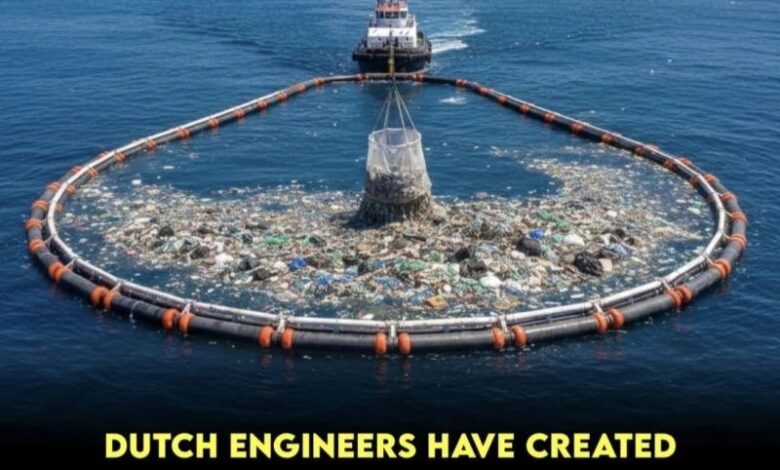
This innovative project by The Ocean Cleanup represents a paradigm shift in environmental engineering. By transitioning from localized beach cleanups to large-scale oceanic “vacuuming,” Dutch engineers are addressing the Great Pacific Garbage Patch (GPGP) an area of plastic accumulation twice the size of Texas.
Here is a structured breakdown of how this technology works and its strategic importance:
1. The Technology: “System 03” and Beyond
The centerpiece of the operation is a 600-meter-long floating barrier designed to act as an artificial coastline.
- U-Shaped Geometry: The system forms a massive curve that uses a 3-meter-deep “skirt” hanging beneath the surface to funnel plastic into a central collection zone.
- Passive Propulsion: It is engineered to move with the natural forces of the ocean currents, wind, and waves ensuring it follows the same paths as the plastic it is trying to catch.
- Targeted Debris: The design is versatile enough to trap varied pollutants, from “ghost nets” (discarded fishing gear) to microplastics as small as a few millimeters.
2. Strategic “Source-to-Sea” Approach
The project recognizes that cleaning the ocean is futile if the “faucet” is still running. Their strategy is two-pronged:
- Ocean Recovery: Deploying fleets in the GPGP to remove legacy plastic that has been circulating for decades.
- River Interception: Using solar-powered “Interceptors” placed in the world’s most polluting rivers to catch debris before it ever reaches the sea.
3. The Circular Economy: From Waste to Wealth
The Ocean Cleanup does not just dump the collected plastic back into landfills. They have pioneered a traceable value chain:
- Recovery: Plastic is hauled onto support vessels and brought to land.
- Recycling: The debris is processed and turned into high-quality, durable products (such as sunglasses or park benches).
- Reinvestment: Proceeds from these products are funneled back into the funding of future cleanup operations, creating a self-sustaining financial model.
4. Key Performance Indicators (KPIs)
| Metric | Impact |
| Scale | Aims to remove 90% of floating ocean plastic by 2040. |
| Energy | Minimal carbon footprint due to passive movement and solar-powered interceptors. |
| Biodiversity | Protects thousands of marine species from ingestion and entanglement. |
5. The Path Forward
As the fleet scales up, the goal is to deploy dozens of these systems globally. This effort serves as a global proof-of-concept: environmental challenges that once seemed “too big to fix” can be solved through the marriage of fluid dynamics, satellite monitoring, and persistent engineering.
The takeaway: The “Giant Ocean Vacuum” is more than a tool; it is a global demonstration of how humanity can reverse ecological damage through intentional design.