
Smarter rooftops
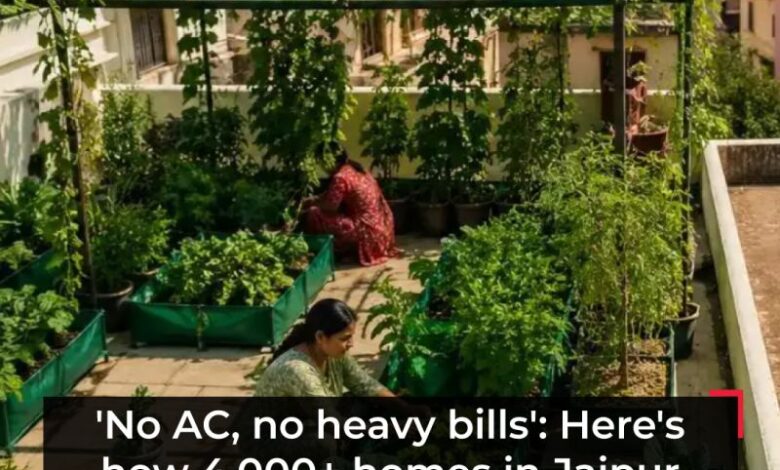
Smarter Rooftops as Climate Infrastructure
As global urban heatwaves intensify, cities are facing a dangerous feedback loop: rising temperatures drive a surge in air conditioning use, which strains electrical grids and spikes greenhouse gas emissions.
A powerful counter-strategy is unfolding in Jaipur, India, where more than 4,000 homes have converted bare concrete rooftops into active thermal barriers. By deploying cool roofs, green roofs, and sustainable materials, this initiative proves that urban climate resilience can be achieved by retrofitting the surfaces we already have without expanding grid capacity.
1. The Physics of Urban Heat: Bare Concrete vs. Smarter Roofs
To understand why rooftop engineering is critical, we must look at the Urban Heat Island (UHI) effect. Traditional building materials like concrete and asphalt act as thermal sponges, absorbing massive amounts of solar radiation during the day and radiating that heat back into the city at night.
  [ TRADITIONAL ROOF ]                    [ SMARTER ROOF ]
     Solar Radiation                         Solar Radiation
          │                                       │
          ▼                                       ▼
┌───────────────────┐                   ┌───────────────────┐
│   Bare Concrete   │                   │ Reflective/Green  │
└───────────────────┘                   └───────────────────┘
     │        │                                   │
     ▼        ▼                                   ▼
Absorbs  Radiates Heat                  Reflects   Evapo-
 Heat     Indoors                       Sunlight  transpiration
The Two Core Mechanisms of Rooftop Cooling
- Albedo Modification (Cool Roofs): Standard dark roofs have an albedo (solar reflectance) of only 10–20%, absorbing up to 90% of solar energy. Smarter rooftops utilize highly reflective coatings and specialized heat-resistant tiles to achieve an albedo of 70–80%, bouncing the majority of sunlight back into the atmosphere before it can infiltrate the building envelope.
- Evapotranspiration & Insulation (Green Roofs): Rooftop gardens do not just block the sun; they actively cool the air. Plants absorb water through their roots and release it as vapor through their leaves a process called evapotranspiration which acts as a natural, electricity-free air conditioner.
2. Technical Breakdown: Three Smarter Rooftop Interventions
| Typology | Primary Materials / Methods | Core Climate & Thermal Benefits |
| Cool Roofs | Liquid-applied elastomeric coatings, white acrylic polymers, reflective ceramic tiles. | * Maximizes solar reflectance. * Reduces rooftop surface temperatures by up to 15–25°C (27–45°F). |
| Green Roofs | Lightweight soil layers, drainage mats, drought-resistant vegetation (sedum, local succulents). | * Provides superior thermal insulation. * Mitigates stormwater runoff by absorbing up to 50–60% of rainfall. |
| Modular / Solar Hybrid | Raised solar panel arrays over reflective surfaces or green roofs. | * Shading lowers roof temperature. * Cooler ambient air increases solar panel efficiency by keeping them closer to their optimal operating temperature. |
3. Macro Benefits: Why Smarter Roofs are Critical Climate Infrastructure
Transitioning from passive to active rooftops yields measurable advantages across five major urban metrics:
                  ┌──────────────────────────────┐
                  │   SMARTER ROOF BENEFITS      │
                  └──────────────┬───────────────┘
                                 │
         ┌───────────────────────┴───────────────────────┐
         ▼                                               ▼
┌────────────────────────────────┐              ┌────────────────────────────────┐
│       MICROECONOMIC SCALE      │              │       MACRO-ENVIRONMENTAL      │
└──────────────┬─────────────────┘              └──────────────┬─────────────────┘
               │                                               │
               ├─► Lowers indoor temp naturally                ├─► Cuts grid-level carbon emissions
               ├─► Reduces residential AC load                 ├─► Mitigates Urban Heat Island (UHI)
               └─► Lowers monthly electric bills               └─► Introduces urban biodiversity pockets
The Compounding Impact: According to data from the U.S. Environmental Protection Agency (EPA), clean energy and cool roof initiatives can reduce peak cooling energy demand in buildings by 10–15%. On a city-wide scale, if enough rooftops adopt high-albedo surfaces, the baseline ambient air temperature of the entire urban area drops, making the city structurally more liveable.
4. The Path Forward: Designing Cities from the Top Down
The future of green architecture is not just about building taller, flashier, or more computationally complex structures. True climate innovation lies in optimization.
By prioritizing decentralized, low-tech, and nature-connected interventions on existing real estate, municipal governments can convert millions of square meters of wasted concrete into frontline defense systems against extreme heat. The roofs above us are no longer just shelter they are the key to cooling our planet’s cities from the top down.


