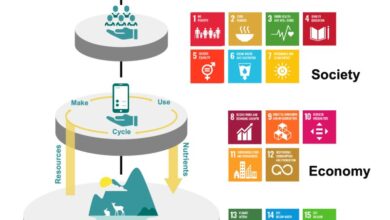
Sustainability risk management framework

Operationalizing Resilience: A 4-Step Sustainability Risk Management Framework
Climate risk management fails when analysis exists in a vacuum. To be effective, climate data must do more than “describe” the future it must dictate it. When climate exposure is disconnected from the boardroom, it remains a line item in a CSR report rather than a driver of capital allocation.
I. Strategic Alignment: The Governance Anchor
The most sophisticated climate model is useless if it doesn’t influence Decision Rights. Sustainability risk management begins at the top, where risk appetite and long-term planning are defined.
- Capital Allocation: Does your climate exposure change where you invest your next $100M?
- Governance Structures: Are climate targets tied to executive compensation and board-level oversight?
- Strategic Fit: Assessing future investments against 2030 and 2050 decarbonization pathways.
Insight: Without strategic alignment, climate analysis is merely “green-tinted accounting” it tracks the past but fails to pivot the future.
II. Prioritization: Identifying Material Exposure
Not all risks are created equal. Effective frameworks distinguish between the “noise” of general environmental impact and the “signal” of Material Risk.
The Two Lenses of Climate Risk
| Risk Type | Focus Area | Implications |
| Physical Risks | Acute (storms, floods) & Chronic (heat stress, sea-level rise). | Asset damage, supply chain disruption, insurance premiums. |
| Transition Risks | Policy shifts, carbon pricing, market sentiment, and tech breakthroughs. | Stranded assets, compliance costs, brand erosion. |
- Quantification: Moving from qualitative descriptions (“high risk”) to financial metrics ($ Value-at-Risk).
- Stakeholder Input: Validating assumptions with suppliers, customers, and investors to capture the full value chain.
III. Operationalization: Converting Analysis to Action
The “Action Phase” integrates climate data into the company’s daily “nervous system.” This is where risk management becomes operational.
- Time Horizons: Defining specific responses for the Short (0–3 years), Medium (3–10 years), and Long (10+ years) term.
- KRIs (Key Risk Indicators): Developing indicators that act as “early warning systems” for climate triggers.
- Financial Integration: Monitoring climate metrics alongside standard EBITDA and IRR to ensure resilience is profitable.
IV. Communication: Transparency as Governance
Reporting should not be a “compensation” for a lack of action; it should be the evidence of it. Transparent disclosure builds trust with capital markets and regulators.
- Beyond Disclosures: Reporting should reflect not just the risks, but the assumptions and uncertainties behind the data.
- Strategic Feedback Loop: Using reporting data to refine Step I (Strategic Alignment), creating a cycle of continuous improvement.
The Bottom Line
Climate risk management is successful only when it forces a change in strategy, investment priorities, and risk limits. If your climate framework hasn’t resulted in a “No” to a previously attractive investment, it isn’t working yet.
source: