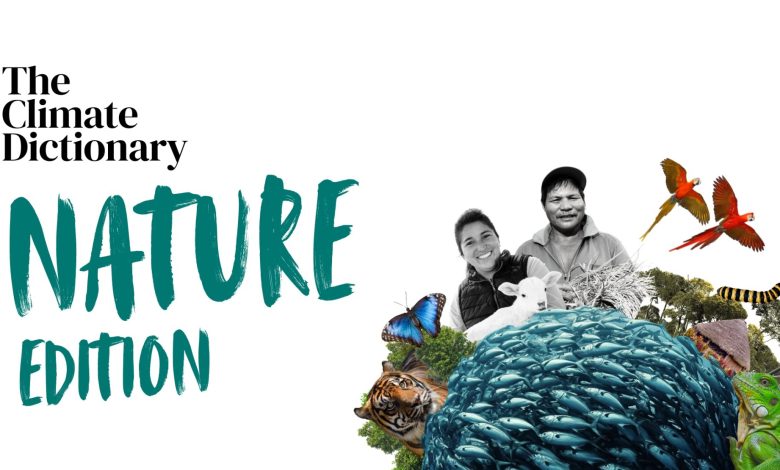
The climate dictionary nature edition
Imagine a world where every day you could feel a deep connection to nature, breathing clean air, drinking pure water, and sharing this incredible planet with a rich diversity of life. But that bond with our natural world is fraying. We’re using resources as if we had 1.7 Earths, far beyond what our single planet can sustain. This overreach isn’t just abstract data—it’s a living crisis that affects every community, economy, and ecosystem on Earth. The time to act is now, to protect what remains and restore what we’ve lost.
If you’re new to environmental action or just starting to dive into the details of the nature and biodiversity crisis, let this guide be your launchpad. These are terms not just to learn, but to live by, because each defines a piece of the path toward a more harmonious, sustainable world. Share this knowledge with friends, family, and anyone who cares about our planet’s future.
Nature Crisis: Confronting Our Footprint
The nature crisis is the rapid, alarming breakdown of our planet’s life-sustaining systems. Through deforestation, overfishing, pollution, and overconsumption, we’re straining ecosystems to their breaking point. When we ignore nature’s true value in our daily lives and economic systems, we fuel this crisis and its ripple effects—extinctions, ecosystem collapse, and an imbalance that jeopardizes all life. Today, high-income countries consume far more than their share, while low- and middle-income countries bear the brunt of this resource strain.
Nearly two million species are on the brink of extinction. To reverse this course, we must conserve and restore Earth’s vital systems, transform production and consumption, and bring nature’s priceless services into the very core of policy and investment. This is how we create a “nature-positive” future.
Planetary Boundaries: Respecting Earth’s Limits
Think of planetary boundaries as Earth’s “safe zone”—limits we should respect to keep our planet stable and livable. Each boundary represents a life-support system, like freshwater availability or climate stability, that humanity needs to thrive. But we’ve already crossed six of these nine boundaries, pushing us into dangerous territory where life becomes harder for us and other species. Economic systems that ignore these boundaries fail us all. Recognizing these limits means rethinking “endless growth” and making changes to stay within Earth’s safe zone.
Land Degradation: Losing Ground, Gaining Urgency
Our land is the foundation of life, yet we’re degrading it rapidly through overuse and exploitation. The consequences are staggering—disrupted rainfall patterns, intensified droughts and floods, and diminished food security. Left unchecked, land degradation will consume 90% of global land by 2050, leading to more poverty, conflict, and migration.
To halt this, the United Nations aims for “land degradation neutrality” by 2030. Adopting regenerative practices and restoring degraded ecosystems are crucial steps to make this vision a reality, ensuring sustainable food systems for a growing global population.
Biodiversity Hotspots: The Race to Protect Nature’s Richest Regions
Biodiversity hotspots are the world’s most biologically diverse yet threatened areas, containing nearly half of Earth’s unique plant species and a third of animal species. Though they once covered over 15% of land, these habitats have been reduced to just 2.5%, with climate change accelerating the decline. Safeguarding these hotspots is not just a moral imperative but a survival strategy. We need to prevent further loss, protect carbon-rich ecosystems, and support the biodiversity that sustains all life on Earth.
Environmental Justice: Rights for a Just and Sustainable Future
Environmental justice centers on the idea that everyone deserves the right to a healthy, sustainable environment. The triple crisis of biodiversity loss, climate change, and pollution intensifies existing inequalities, hitting marginalized communities hardest. Achieving justice means securing human rights, respecting Indigenous lands, and ensuring future generations inherit a livable planet.
This requires transformative solutions, ones that balance rights and responsibilities and offer equitable protections for all. As we pursue environmental justice, we commit to a world where dignity, opportunity, and well-being are within reach for everyone.
Ecocide: Holding Destructive Forces Accountable
When vast tracts of rainforest are slashed or oceans poisoned beyond recovery, it’s not just an environmental impact—it’s ecocide. Defined as the willful destruction of nature with severe, lasting harm, ecocide laws aim to hold individuals and corporations accountable for their actions. These laws are a powerful deterrent against large-scale environmental harm, protecting ecosystems that support human communities and countless species. For future generations to flourish, ecocide laws are crucial safeguards against the unchecked exploitation of Earth’s finite resources.
Indigenous Knowledge: A Path to Harmony
Indigenous Peoples have long lived in balance with nature, drawing on knowledge and practices that nurture ecosystems and adapt to changing climates. Their wisdom offers tested solutions for mitigating and adapting to climate change, preserving biodiversity, and restoring balance between humanity and nature. Yet they are often excluded from global environmental decisions. To protect the biodiversity they steward, we must respect Indigenous rights, knowledge, and ways of life and bring their voices into the heart of environmental action.
Green Economy: Redefining Progress
Imagine an economy where human well-being and environmental health grow together. A green economy values jobs and industries that protect and restore our ecosystems, reduce emissions, and promote social equity. Green finance channels resources toward sustainable sectors, from energy to agriculture, helping us reshape the economic landscape to respect both people and the planet. Creating a green economy is about forging triple benefits—economic, environmental, and social—where prosperity includes a livable, sustainable world for future generations.
Blue Economy: Stewarding the Ocean’s Wealth
Our oceans drive the Earth’s natural systems, from regulating climate to supplying oxygen. A blue economy seeks to protect and sustainably manage the oceans, preserving coastal livelihoods and marine biodiversity. By balancing traditional industries like fishing with emerging fields such as marine biotechnology, we ensure that the ocean’s bounty continues to sustain humanity without compromising its health.
Regenerative Agriculture: Farming in Partnership with Nature
Regenerative agriculture represents a revolution in farming—an approach that nurtures soil health, conserves water, and enriches biodiversity. Unlike intensive farming, which depletes soil and accelerates climate change, regenerative practices enrich ecosystems. Healthy soils store more carbon and produce nutrient-dense food, fostering resilience to climate impacts and preserving nature for future generations.
source :
https://climatepromise.undp.org/news-and-stories/climate-dictionary-nature-edition