
The Link Between Forests and the SDGs
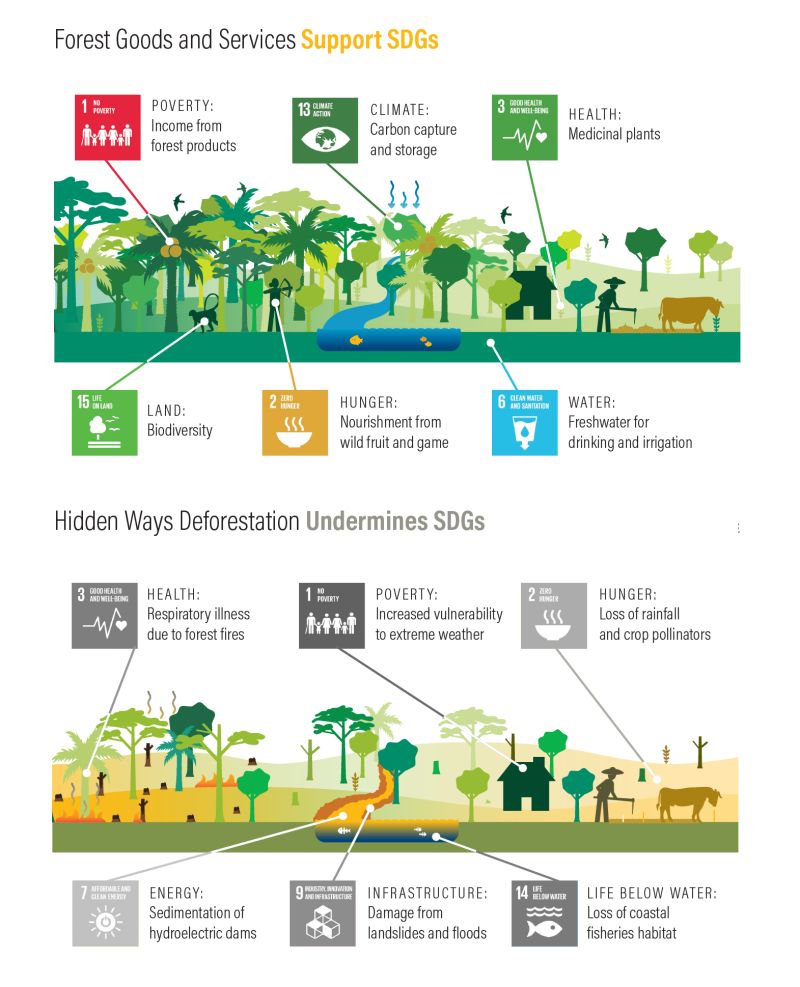
Forests are vital to many Sustainable Development Goals (SDGs). They provide food, medicine, and income, directly supporting poverty reduction (SDG 1), food security (SDG 2), and health (SDG 3). Forests also play a critical role in combating climate change by capturing carbon (SDG 13) and preserving biodiversity, especially in tropical regions (SDG 15).
Forests also support clean water and agriculture. Forested watersheds filter water for drinking and irrigation, contributing to clean water access (SDG 6). Mangroves and other coastal forests protect marine life and fisheries, which are crucial for sustaining coastal ecosystems (SDG 14). These ecosystems are central to both land and water-based sustainability.
However, deforestation threatens these benefits. The destruction of forests reduces access to essential resources, making communities more vulnerable to disasters like floods and landslides (SDGs 1 and 11). It leaves landscapes less resilient, setting back local economic progress and well-being.
Deforestation also harms agriculture and food security by reducing rainfall, pollination, and water supplies needed for crops (SDG 2). Without trees, farming becomes less sustainable, increasing hunger risks. Deforestation also worsens water quality, leading to contamination and health issues (SDG 6).
The environmental damage is equally severe. Forest loss leads to higher carbon emissions, undermining climate action (SDG 13). It also causes soil erosion, which damages infrastructure like dams, reducing clean energy production (SDG 7). Forest fires from deforestation worsen air quality, impacting health (SDG 3).
In short, forests are crucial for achieving many SDGs, but deforestation undermines this progress. Protecting forests is essential for sustaining ecosystems, human health, and economic development.
Source: World Resources Institute


