The Trillion-Dollar Climate Reality
The Trillion-Dollar Climate Reality
Climate change is no longer a future risk—it is a present-day economic reality.
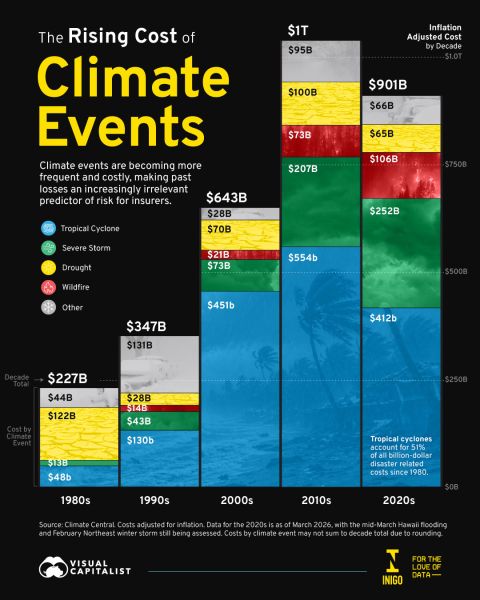
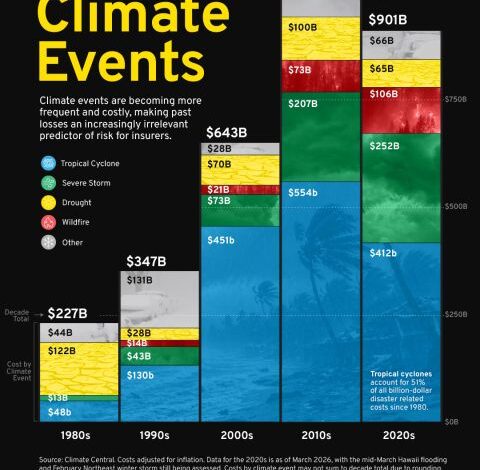
The latest data reveals a striking trend: the cost of climate-related disasters has surged from $227 billion in the 1980s to nearly $1 trillion in the 2010s, with the 2020s already approaching $901 billion and the decade far from over.
What stands out most is that tropical cyclones account for over half of all billion-dollar disaster costs since 1980, highlighting how extreme weather events continue to reshape economies, infrastructure, insurance markets, and communities worldwide.
But the story goes beyond hurricanes and storms.
🔥 Wildfires are becoming more destructive.
🌾 Droughts are impacting food systems and water security.
⛈️ Severe storms are causing unprecedented damage across regions.
🌍 Climate volatility is creating risks that historical models can no longer fully predict.
For businesses, this is not just an environmental challenge—it is a strategic and financial one.
Organizations that invest in:
✅ Climate resilience
✅ Sustainable infrastructure
✅ Risk-aware supply chains
✅ Nature-based solutions
✅ Decarbonization strategies
will be better positioned to navigate an increasingly uncertain future.
The data sends a clear message: the cost of inaction is rising faster than the cost of preparation.
As climate events become more frequent and severe, resilience is no longer optional—it is becoming a competitive advantage.
The question is no longer whether climate change will impact business and society.
The question is: Are we investing enough today to reduce tomorrow’s trillion-dollar losses?