Turning trash into energy
The Physics of Hope: Engineering with Zero Cost
At the heart of this innovation is a simple law of physics: refraction.
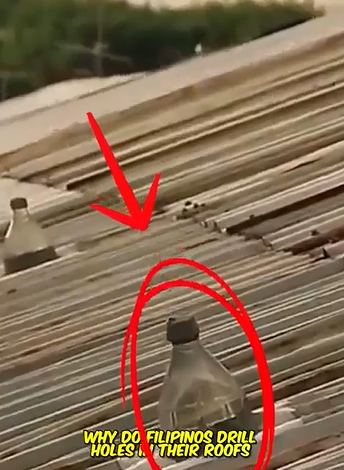
By placing a clear plastic bottle filled with water (and a drop of bleach to prevent algae) into a galvanized iron roof, the water acts as a convex lens. It catches sunlight and scatters it 360o around a room.
- The Output: A constant, flicker-free light equivalent to a 40–60 Watt incandescent bulb.
- The Carbon Footprint: Near zero.
- The Cost: Virtually nothing but the labor of installation.
Beyond the Bottle: A Circular Revolution
Liter of Light isn’t just “recycling”; it is upcycling with intent. It hits three critical pillars of the circular economy that every modern practitioner should study:
1. Waste as High-Value Infrastructure
In a linear economy, a plastic bottle is a liability. In this model, it becomes a durable building component. By shifting our perspective, we transform “trash” into a decentralized utility.
2. Democratizing Technology
The “Night Light” version of this tech uses simple, open-source solar circuits. By teaching local communities often women and youth how to solder and assemble these panels, the initiative creates local green jobs rather than fostering a culture of aid dependency.
3. Resilience Through Decentralization
Traditional power grids are vulnerable to storms and infrastructure failure. A “Liter of Light” home is autonomous. When the grid goes down, the sun and the bottle stay on.
The Multiplier Effect: Impact Beyond Illumination
Access to light is the first domino in a chain of socio-economic development:
- Education: Children can study after sunset, directly impacting literacy rates.
- Safety: Outdoor solar streetlights (made from bamboo and PVC) reduce crime and increase nighttime mobility in informal settlements.
- Health: Replacing kerosene lamps eliminates toxic fumes and reduces the risk of domestic fires.
The Call to Action
The challenge for the global north is to stop looking at these solutions as “poor man’s tech” and start seeing them as resource-efficient wisdom.
The “Liter of Light” proves that we do not always need complex, high-cost silicon-valley solutions to solve planetary problems. Sometimes, the most sophisticated answer is already sitting in our recycling bin.
source: