Climate mitigation vs climate adaptation
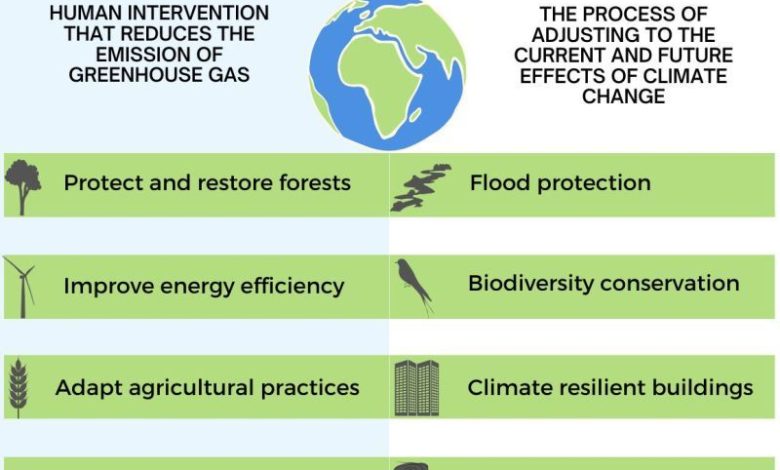
As we grapple with the escalating climate crisis, two key approaches emerge as pillars of our collective response: climate mitigation and climate adaptation. Each serves a vital role in safeguarding our planet, but they operate in fundamentally different ways complementing each other in the fight for a sustainable future.
What is Climate Mitigation?
Imagine a world where greenhouse gas emissions continue unchecked, allowing the planet’s temperature to soar to unprecedented levels. Climate mitigation is the strategy that prevents this scenario. By reducing emissions, enhancing carbon sinks, and transitioning to cleaner energy systems, mitigation tackles the root cause of climate change excessive greenhouse gases in the atmosphere.
From shifting to renewable energy sources to conserving forests, mitigation actions are proactive efforts to curb global warming before it spirals out of control. It’s humanity’s way of hitting the brakes on a speeding car.
What is Climate Adaptation?
But what happens when the car has already hit a few obstacles? Adaptation steps in as the response to the impacts we can’t avoid. It’s about adjusting to the present and preparing for the future—a future that’s already being shaped by rising sea levels, more intense storms, and unpredictable rainfall patterns.
Adaptation is not just about survival; it’s about building resilience. It’s the innovative farmer designing irrigation systems to cope with droughts. It’s the coastal communities constructing defenses against rising seas. It’s the cities implementing green roofs and shaded streets to combat deadly heatwaves.
The Bridge Between: Nature-Based Solutions (NBS)
While mitigation and adaptation are often discussed separately, there’s a powerful strategy that bridges the two Nature-Based Solutions (NBS). These solutions harness the incredible resilience and capacity of ecosystems to address the climate challenge.
Nature offers us tools that are as effective as they are beautiful. By restoring, protecting, and enhancing ecosystems, we can simultaneously mitigate emissions and adapt to the impacts of climate change. For instance:
Avoiding emissions by protecting landscapes
Forests, wetlands, and other natural landscapes act as vast carbon sinks. Preserving them means we not only sequester carbon but also protect the biodiversity that supports life on Earth.
Restoring ecosystems like drained peatlands
Damaged ecosystems, such as degraded peatlands, release carbon rather than storing it. By restoring them, we transform these areas back into effective carbon sponges.
Fostering ecological diversity
Monocultures landscapes dominated by a single species are vulnerable to pests, diseases, and extreme weather. Bringing back ecological diversity strengthens these systems, making them more resilient to climate shocks.
Creating room for water
Rivers and wetlands, if given space to flow and expand naturally, can reduce the risk of catastrophic floods while providing habitats for countless species.
Integrating nature into urban and agricultural areas
Green roofs, urban forests, and regenerative agriculture not only store carbon but also enhance livability and productivity, reducing urban heat islands and improving soil health.
A Shared Responsibility
Mitigation and adaptation are not choices it’s not an either/or scenario. Both are essential for a balanced and effective climate strategy. And through Nature-Based Solutions, we are reminded that some of the most innovative and impactful actions are not entirely new; they lie in re-establishing harmony with the natural systems that have always sustained us.
As individuals, communities, and nations, our responsibility lies in weaving these strategies together, embracing the science, and acting with urgency. Because in the story of climate change, we are not just observers we are the authors of its next chapter. Will it be a tale of inaction or transformation? The choice is ours.
source :