What makeup micro plastics?
Unmasking the Invisible Sources of Microplastic Pollution
When most people think of microplastic pollution, they picture macro-plastic waste like single-use plastic bags, water bottles, and straws breaking down slowly under the sun. While mismanaged municipal waste is a serious issue, it is actually a minority contributor to the primary microplastics entering our global ecosystems.
Microplastics (plastic particles less than 5 millimeters in diameter) are largely unreeled directly from the everyday products we wear, the vehicles we drive, and the design of modern urban life.
The True Sources of Microplastic Pollution
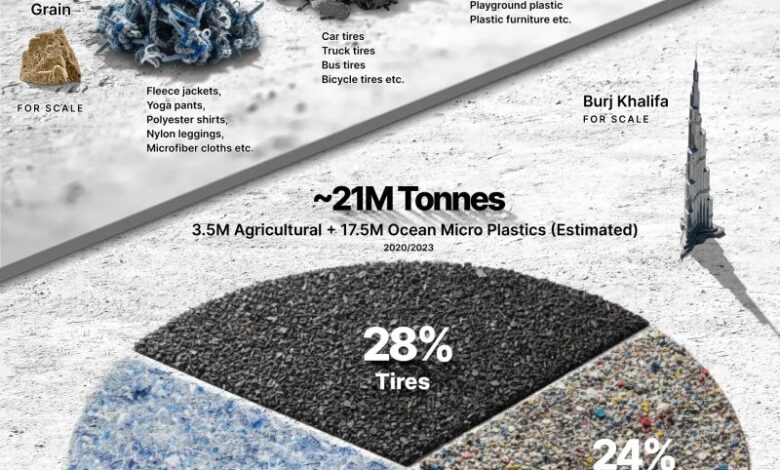
According to global environmental data, the primary drivers of microplastic leakage challenge the common public narrative. Instead of ocean-bound litter, the majority of microscopic plastic sheds directly from consumer use.
       [ GLOBAL PRIMARY MICROPLASTIC EMISSIONS ]

  ┌────────────────────────────────────────────────────────┐
  │ 52%   Tire Wear & Urban Road Dust                      │
  ├────────────────────────────────────┬───────────────────┤
  │ 35%   Synthetic Textiles (Clothing)│
  ├────────────────────────────────────┤
  │ 13%   Other Sources                │
  └────────────────────────────────────┘
1. Tire Wear and Road Friction (28%)
Every time a vehicle accelerates, brakes, or turns, the friction between the tire and the road shreds microscopic particles from the tire tread. Modern tires are not made of pure natural rubber; they are highly engineered amalgams of synthetic rubber plastics (such as styrene-butadiene).
- The Pathway: These rubber-plastic particles wash off road surfaces during rainstorms, entering storm drains and traveling directly into local rivers and oceans.
2. Urban Road Dust (24%)
Urban dust is a complex mixture of degraded road markings (which use plastic-based polymers for durability), weathered building coatings, and general synthetic debris from city infrastructure. Like tire wear, this dust is constantly kicked up by traffic and wind, spreading through the air and water networks.
3. Synthetic Textiles and Everyday Clothing (35%)
More than one-third of all primary microplastics in the ocean come from the fashion industry. Modern apparel relies heavily on cheap, durable synthetic fibers like polyester, nylon, acrylic, and spandex—all of which are petroleum-based plastics.
- The Pathway: Mechanical friction during a single domestic washing machine cycle can cause a single synthetic garment to shed over 1,900 individual microfibers. These fibers bypass municipal wastewater treatment filters due to their microscopic size and flow directly into aquatic ecosystems.
Primary vs. Secondary Microplastics: The Technical Difference
To solve the plastic crisis, scientists divide these pollutants into two categories based on how they enter the environment:
| Category | Definition | Primary Examples |
| Primary Microplastics | Particles purposefully manufactured to be small, or directly shed from consumer products during standard use. | Synthetic clothing fibers, tire wear particles, and industrial plastic pellets (nurdles). |
| Secondary Microplastics | Particles that result from the breakdown and fragmentation of larger plastic items over time. | Disintegrated plastic bags, fragmented water bottles, and brittle fishing nets degraded by UV sunlight. |
Why This Redefines the Solution
Recognizing that microplastics are embedded in our daily infrastructure changes how we must approach environmental policy and innovation. Relying solely on “clean-up” campaigns or banning plastic straws will not stop the invisible rain of synthetic fibers and tire dust.
Meaningful action requires fundamental structural shifts, including:
- Textile Engineering: Developing commercial-scale biodegradable fabrics and mandating micro-fiber capture filters on all domestic and industrial washing machines.
- Material Science: Redesigning tire compounds with highly durable, non-toxic bio-polymers that do not shed persistent plastics into water systems.
- Urban Planning: Expanding public transit to reduce total vehicle miles driven, and utilizing specialized street-sweeping infrastructure designed to capture micro-dust before it enters storm drains.
source:
https://www.linkedin.com/feed/update/urn:li:activity:7469703289308086272/
Temukan peta dengan kualitas terbaik untuk gambar peta indonesia lengkap dengan provinsi.