Building resilience: 6-Step journey to climate risk management
The increasing frequency and severity of extreme weather events, resource scarcity, and ecosystem disruptions are no longer distant possibilities—they are urgent challenges shaping our present and future. Addressing these climate-related risks requires more than reactionary measures; it demands a systematic, forward-thinking approach that equips governments, organizations, and communities with the tools to anticipate, adapt, and act.
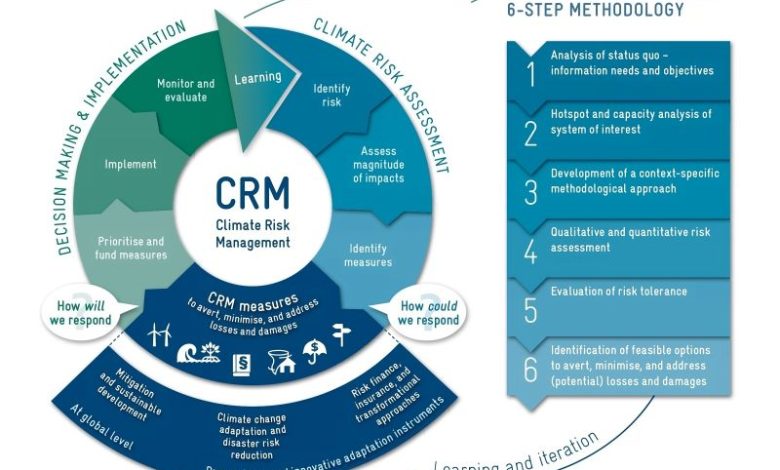
Enter the 6-Step Methodology for Climate Risk Assessment, a practical framework designed to transform uncertainty into actionable strategies for resilience and sustainable development. Developed by GP L&D, this methodology not only identifies vulnerabilities but also aligns interventions with public policies and investments, ensuring long-term impact.
1. Laying the Foundation: Analyze the Current Status
Every journey begins with understanding where we stand. The first step in this methodology focuses on analyzing the present state to determine information needs and define specific objectives.
By establishing a baseline of existing vulnerabilities, this step sets the stage for a clear, goal-oriented process. For instance, what are the most pressing risks? Who is most affected? What resources are currently available? Answering these questions ensures the entire assessment remains aligned with the overarching climate resilience goals.
🔍 Why it matters: Without a strong foundation, interventions risk missing the mark, wasting valuable time and resources.
2. Pinpoint the Problem: Hotspot and Capacity Analysis
Climate risks are not evenly distributed—they strike some regions and systems harder than others. This step identifies the “hotspots” most exposed to risks like floods, droughts, or heatwaves, while also evaluating local capacity to respond.
Imagine mapping a city to reveal neighborhoods prone to flooding due to poor drainage systems or areas where communities lack resources to adapt to rising temperatures. This targeted analysis sharpens the focus, ensuring resources are directed where they’re needed most.
🔍 Why it matters: Efficient resource allocation can save lives and minimize damage in the most vulnerable areas.
3. Tailor the Approach: Adapt to Local Contexts
No two places experience climate risks in exactly the same way. This step emphasizes the importance of customizing the assessment to reflect unique socio-economic and environmental factors.
For instance, rural communities dependent on agriculture face different risks than urban areas dominated by industrial activities. Adapting to these nuances makes the risk assessment not just a technical exercise but a human-centered strategy.
🔍 Why it matters: A one-size-fits-all solution cannot address the diverse realities of climate risks.
4. Dig Deeper: Conduct Comprehensive Risk Assessments
This is where the heavy lifting happens—a thorough assessment that uses both qualitative and quantitative methods to capture the full spectrum of potential impacts.
It’s about looking beyond immediate effects like damaged infrastructure to understand long-term consequences, such as disrupted livelihoods, economic instability, and social inequality. Combining data with lived experiences paints a more holistic picture of risk.
🔍 Why it matters: You can’t manage what you don’t measure, and effective action requires a complete understanding of the problem.
5. Define the Limits: Evaluate Risk Tolerance
Not all risks can be eliminated, but we can define what levels are acceptable. This step establishes clear thresholds, helping prioritize interventions based on urgency and feasibility.
For example, a city may tolerate occasional flooding in parks but cannot afford power grid failures during heatwaves. Understanding these limits ensures resources are focused where they have the greatest impact.
🔍 Why it matters: Clarity on risk tolerance helps avoid over-preparation in some areas while under-preparing in others.
6. Take Action: Identify Feasible Measures
The final step translates all insights into actionable, cost-effective solutions. Whether it’s building seawalls, adopting early warning systems, or introducing climate-resilient crops, this step aligns recommendations with available budgets and policy frameworks.
The focus here isn’t just on what’s ideal but on what’s practical—actions that communities can implement and sustain over time.
🔍 Why it matters: The most brilliant strategy is useless if it can’t be executed effectively.
The Power of Preparation
Climate risks are inevitable, but their impact doesn’t have to be. By adopting this structured 6-step methodology, decision-makers can move from reactive crisis management to proactive resilience-building.
This approach is more than a framework—it’s a commitment to safeguarding lives, livelihoods, and the future of our planet. It’s about turning the abstract challenge of climate change into concrete, localized actions that make a real difference.
source :