Bioluminescent plant in China
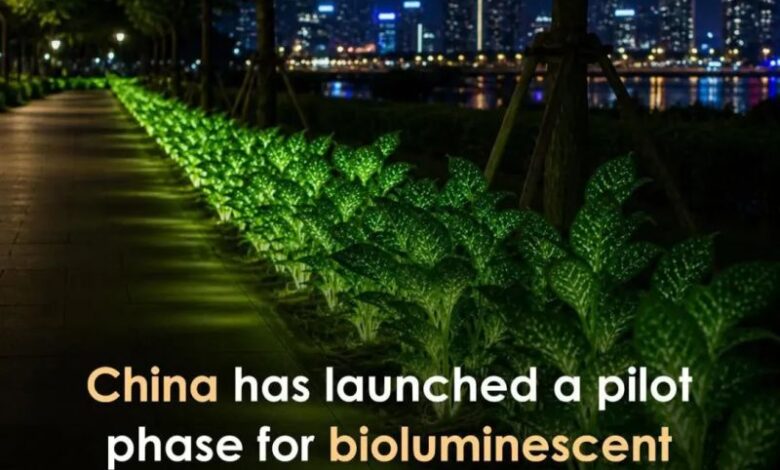
The Living Neon China’s Quest to Replace Bulbs with Branches
The concrete jungles of Beijing and Shenzhen are flirting with a luminous revolution that feels less like science fiction and more like a return to nature. Forget the harsh buzz of LED streetlamps and the sterile hum of power grids; the future of urban lighting might just need a watering can instead of a technician.
In a groundbreaking fusion of biology and urban design, researchers at South China Agricultural University alongside the biotech pioneers at Magicpen Bio have successfully whispered a new language into the DNA of our flora. By stitching the bioluminescent secrets of fireflies and deep-forest fungi into the genetic fabric of over 20 plant species, they haven’t just grown flowers; they’ve cultivated living lamps.
A Symphony of Soft Light
Imagine strolling through a park in Guangzhou where the path isn’t lit by flickering electricity, but by the ethereal pulse of:
- Orchids that shimmer like captured starlight.
- Sunflowers that mirror the moon’s glow long after the sun has set.
- Chrysanthemums radiating a soft, emerald aura.
These plants don’t just “glow” they breathe light. Through a natural biochemical process, they bypass the power plant entirely, turning nutrients into a steady, hauntingly beautiful luminescence.
From Infrastructure to Ecosystem
The ambition behind this “Glow-Tech” isn’t merely aesthetic. It represents a radical departure from how we build our world. By turning parks into power-free lighting systems, China is testing a future where:
- Energy demand vanishes for public illumination.
- Light pollution softens, replacing blinding glare with a “living” spectrum that is gentler on the eyes and the environment.
- Urban emissions drop, as the “hardware” of the city begins to photosynthesize.
“Cities don’t always need more hardware… sometimes they need living systems.”
The Growing Pains
We aren’t quite ready to chop down the lampposts yet. The technology is currently in its “dawn” phase, facing hurdles that any gardener would recognize:
- Luminosity: While beautiful, the glow currently lacks the “throw” needed to safely light a four-lane highway.
- Biological Stability: Ensuring these plants thrive in harsh urban environments without losing their spark.
- Ecological Harmony: Understanding how these glowing newcomers interact with local insects and nocturnal wildlife.
The Verdant Horizon
This is more than a biotech breakthrough; it is a philosophical pivot. For a century, we have lit the dark by conquering it with glass and wire. Now, we are learning to grow the light instead.
We are standing at the edge of an era where trees won’t just absorb the world’s carbon they will illuminate its path. In the cities of tomorrow, the greenest way to see the night might be to simply let the forest wake up.