
How is a carbon credit created?
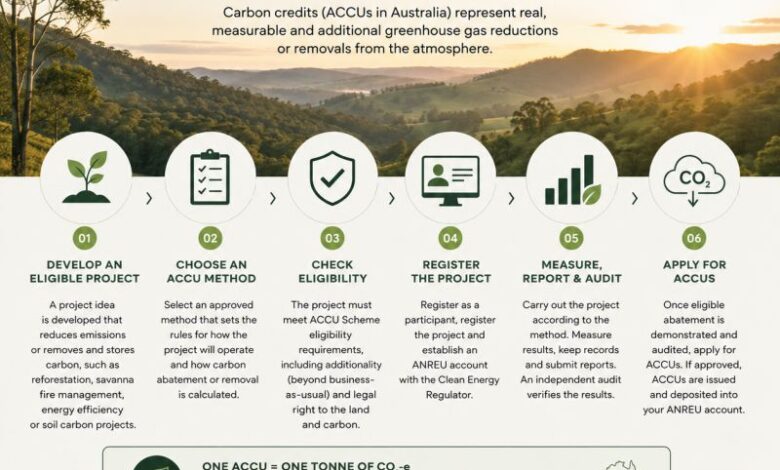
How is a carbon credit created?
We often hear the phrase “carbon credit” — but where does one actually come from?
A carbon credit isn’t simply created because someone plants a tree or installs renewable energy.
Behind a legitimate carbon credit is a project, methodology, measurement and verification process designed to quantify an environmental outcome.
At a high level, it looks something like this:
🌱 1. A project is developed
An activity is designed to reduce, avoid or remove greenhouse gas emissions.
📏 2. The environmental impact is measured
The project uses an approved methodology to calculate the emissions reduction or removal.
🔍 3. The project is monitored and verified
Data and project activities are assessed to determine whether the claimed outcome has actually occurred.
📜 4. Credits are issued
Once the requirements have been met, eligible credits can be issued to represent the verified environmental outcome.
🌏 5. The credit can enter the market
Credits may then be bought, sold, held or surrendered depending on the market, scheme and purpose.
And this is where things get interesting.
Not all carbon credits are the same.
The project behind the credit matters.
The methodology matters.
The measurement matters.
The verification matters.
And ultimately, the quality and integrity of the environmental outcome matters.
At Carbon Credit Sales, we believe environmental markets should be easier to understand — not harder.
Our goal is to help people move from:
“I don’t understand carbon markets.”
to:
“I understand what I’m buying, where it came from and why it matters.”
Because confidence begins with understanding.


