Understanding Environmental Impact Assessment (EIA): A Key Tool for Sustainable Development
Understanding Environmental Impact Assessment (EIA): A Key Tool for Sustainable Development
🔎 What is EIA?
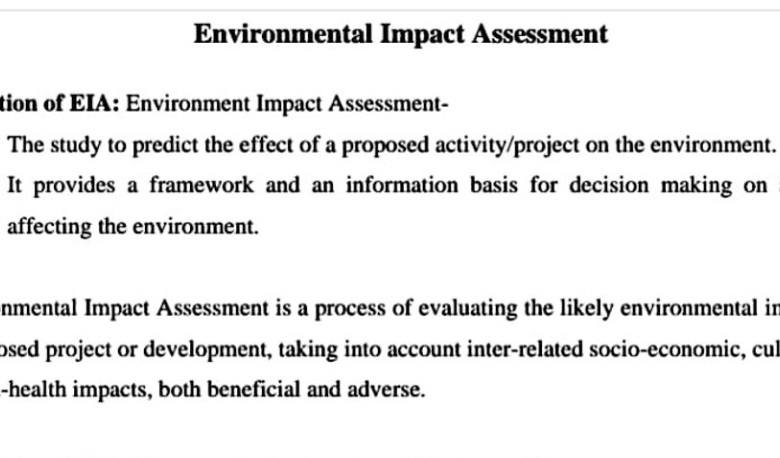
EIA is a systematic process used to predict the environmental consequences of proposed projects before the decisions are made. It considers not only environmental factors but also socioeconomic, cultural, and health-related impacts—both positive and negative.
🎯 Why is EIA so important?
In rapidly developing countries like Bangladesh and others across the globe, the natural balance between biotic and abiotic components often gets disturbed due to unchecked development. EIA steps in to ensure:
→ Efficient resource use
→ Risk identification and mitigation
→ Informed decision-making
→ Sustainable and holistic development
→ Protection of public health and safety
⚙️ Core Values of EIA:
1. Integrity – An unbiased and balanced process
2. Utility – Providing credible insights for decision-makers
3. Sustainability – Leading to protective and corrective actions
📋 Steps in the EIA Process:
1. Screening
2. Scoping
3. Impact Analysis
4. Mitigation Measures
5. Reporting (EIS)
6. Review
7. Decision Making
8. Monitoring and Compliance
🔍 Methodologies include:
→ Checklists
→ Matrices and Networks
→ Overlay Maps
→ Thresholds and Scaling tools
📌 Real-World Relevance:
In Bangladesh, EIA became legally mandatory for major projects after the Environment Conservation Act (ECA) of 1995 and is essential for obtaining environmental clearance—especially for projects under the Red Category such as power plants, textiles, and tanneries.
📊 Benefits of EIA include:
☑ Reduced environmental damage
☑ Increased community acceptance
☑ Better project design
☑ Integration of projects into their social and ecological context
⚠️ Limitations to Overcome:
While incredibly valuable, EIA often suffers from:
→ Lack of proper baseline data
→ Overly academic reports with little analysis
→ Weak post-clearance monitoring
→ Limited use at the planning/policy level
🏛️ Bangladesh’s Progress:
With policy frameworks like the 1992 Environment Policy and NEMAP (1995), Bangladesh has taken solid steps to institutionalize environmental governance.
However, strengthening the implementation phase and involving communities more actively can make EIA a truly transformative tool.
Whether you’re an environmental professional, civil engineer, policymaker, or student—understanding the EIA process is essential in today’s development-oriented world. Let’s commit to growth that doesn’t cost us our future.
💬 I’d love to hear your experiences with EIA or how environmental assessment is handled in your country. Let’s discuss in the comments.
📎 Feel free to download and explore the full EIA guide attached with this post.
Source: