
What if every rooftop could become a water reservoir?
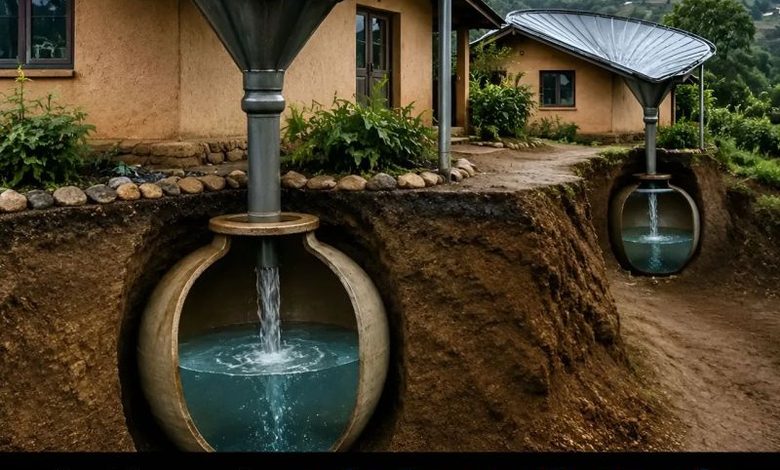
Rethinking the Roof Above Our Heads: How Rwandan Architecture Is Turning Rainfall into Resilience
For generations, roofs have served a single, defensive purpose: keep the weather out. We build them to shed rain, channel runoff into storm drains, and flush precious freshwater away as fast as possible. But in a world grappling with severe seasonal droughts and strained municipal grids, treating rainwater as a waste product is a missed opportunity.
In Rwanda, a quiet architectural shift is turning that logic upside down—reimagining the humble roof not as a shield against nature, but as a giant, active funnel for community resilience.
The Genius of Working With Nature
The brilliance of Rwanda’s rainwater-harvesting movement lies in its refusal to rely on hyper-complex machinery, energy-intensive pumps, or imported hardware. Instead, it relies on low-tech, high-impact design that turns passive infrastructure into active resource management.
                  [ THE RAIN HARVESTING CYCLE ]

       🌧️ PASSIVE COLLECTION  ──►  Slanted Roof Geometry
                                         │
                                         ▼
       🚰 CENTRAL CHANNELING   ──►  Gravity-Fed Gutters
                                         │
                                         ▼
       🏺 SUBTERRANEAN STORAGE ──►  Underground Ceramic Tanks
                                         │
                                         ▼
       🌱 LOCAL RESILIENCE    ──►  Zero-Energy Drought Supply
The system operates on four simple elements:
- Smart Structural Geometry: Roofs are built with exaggerated, inward-sloping pitches that capture precipitation at the point of impact and funnel it through a central artery.
- Underground Ceramic Storage: By using locally sourced clay and ceramic tanks buried beneath the earth, the system naturally shields stored water from direct sunlight, preventing evaporation, keeping water cool, and stopping algal growth—all while preserving valuable surface space for farming or living.
- Zero-Grid Reliance: Gravity does the heavy lifting. There are no electric pumps to break down or power grids to depend on.
- Radical Accessibility: Built using indigenous materials and regional masonry techniques, the infrastructure is easy to construct, repair, and replicate locally.
Why Low-Tech Innovation Holds the Key to Sustainability
Modern climate adaptation often gets bogged down in expensive, high-tech promises: energy-guzzling desalination plants, massive concrete dams, or smart-sensor networks. While high-tech solutions have their place, they often leave rural and under-resourced communities vulnerable to supply chain disruptions and costly maintenance.
This Rwandan model proves that true innovation isn’t about complexity—it’s about intentionality. By pairing basic physics with thoughtful engineering, a single home can cut its reliance on distant water sources, lighten the load on regional infrastructure, and safeguard its household against dry spells.
From Regional Solution to Global Standard?
As climate volatility brings erratic weather patterns to every continent—from torrential downpours one month to heatwaves the next—the principles behind Rwanda’s architecture are universally applicable.
Decentralizing water storage makes communities inherently more resilient. If every suburban home, urban apartment complex, and rural homestead captured the rain falling directly above it, we could fundamentally change how our societies manage freshwater.
The Bigger Question for Our Cities and Homes:
- Urban Planning: What if building codes worldwide mandated rainwater-harvesting geometry on all new residential developments?
- Individual Action: Would you invest in a subterranean or gravity-fed rainwater system if it meant cutting your municipal water dependency in half?
The future of sustainable living doesn’t always require inventing brand-new technology. Sometimes, the most revolutionary step we can take is simply learning how to capture the gifts nature drops right on our doorsteps.
source:
https://lnkd.in/p/eWzpA-_6


