Tahukah Anda
Builiding a common approach to sustainability Social (S)
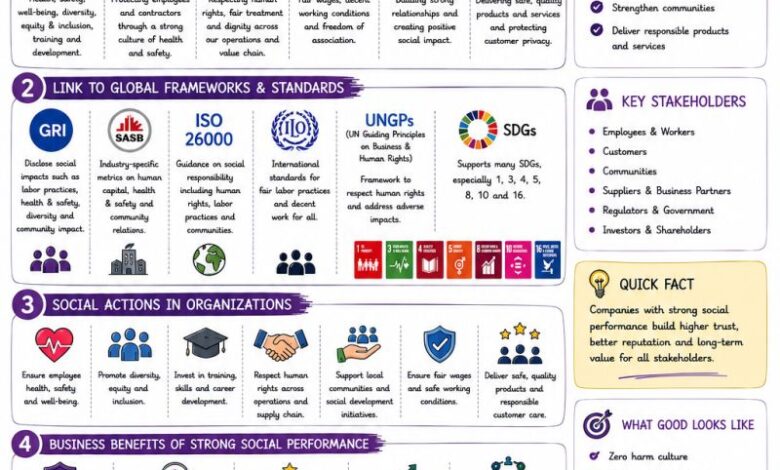
The Social (S) pillar of Environmental, Social, and Governance (ESG) frameworks focuses on an organization’s management of human capital, societal impact, and stakeholder relationships. While environmental strategies address natural capital, the Social pillar measures how effectively a company manages its relationships with workers, suppliers, customers, and local communities.
Organizations with robust Social strategies drive higher employee retention, mitigate supply chain disruptions, protect brand equity, and secure their social license to operate.
4 Core Focus Areas of the Social (S) Pillar
1. Workforce & Human Capital Management
- Diversity, Equity, and Inclusion (DEI): Implementing fair hiring practices, pay equity audits, and inclusive leadership programs.
- Occupational Health and Safety (OHS): Maintaining zero-harm workplace protocols, ergonomic standards, and comprehensive mental health support systems.
- Talent Development & Retention: Investing in continuous upskilling, clear career progression pathways, and competitive compensation packages.
2. Human Rights & Supply Chain Due Diligence
- Labor Standards Enforcement: Preventing forced labor, child labor, and human trafficking across direct operations and tier-N supply chains.
- Fair Living Wages: Ensuring compensation across global operations meets living wage benchmarks rather than local minimum wage baselines.
- Auditing & Traceability: Conducting regular third-party supply chain audits and establishing transparent supplier codes of conduct.
3. Community Engagement & Shared Value
- Free, Prior, and Informed Consent (FPIC): Respecting indigenous rights and engaging local communities prior to major infrastructure or resource extraction projects.
- Local Economic Development: Prioritizing local vendor procurement, infrastructure co-investment, and community capacity-building.
- Corporate Social Responsibility (CSR): Transitioning from ad-hoc philanthropy to strategic, measurable community partnerships tied to core business competencies.
4. Product Responsibility & Consumer Welfare
- Consumer Health & Safety: Rigorous quality control, clear product labeling, and non-toxic material selection.
- Data Privacy & Protection: Protecting consumer data under regulations like GDPR through robust cybersecurity architecture and ethical data practices.
- Equitable Access: Designing products and services that are accessible to underserved or marginalized populations.
Key Global Social Standards & Frameworks
| Framework / Standard | Primary Focus |
| ILO Core Labor Standards | International benchmarks for freedom of association, elimination of forced labor, and non-discrimination. |
| UN Guiding Principles (UNGPs) | Framework for corporate responsibility to respect human rights across global operations. |
| GRI Standards (Social Series 400) | Disclosures on employment, labor relations, health & safety, training, and human rights. |
| SA8000 Certification | Standard for social accountability in manufacturing and supply chain environments. |
Strategic Value Creation Matrix
[Fair Labor & Safety]     ──> Lowers Turnover & Increases Productivity ──┐
[Human Rights Audits]     ──> Mitigates Supply Chain & Legal Risks    ──┼──> Enterprise Resilience
[Community Alignment]     ──> Secures Social License to Operate        ──┤    & Brand Value
[Data & Product Safety]   ──> Builds Customer Trust & Loyalty         ──┘
Developing a comprehensive Social strategy transforms human and community relationships into a strategic competitive advantage.