These bricks are made from rice waste
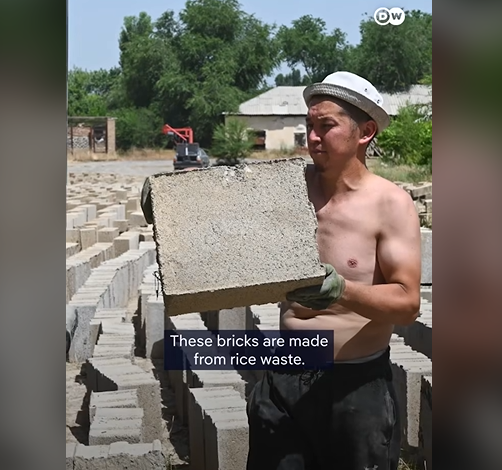
From Harvest to Habitat: The Rise of Rice Husk Bricks
What if the secret to sustainable cities was hidden in the discarded scraps of our global food supply? Innovators are currently proving that rice husks the protective outer shells often treated as agricultural waste are the key to a carbon-neutral construction revolution.
The Anatomy of a Bio-Brick
Unlike traditional clay bricks that require massive energy-intensive kilns, these eco-bricks utilize a “low-heat” or “no-heat” manufacturing process.
- Composition: A stabilized blend of rice husks, clay, and natural binders.
- Process: Instead of being fired at high temperatures, they are often compressed and sun-dried, dramatically reducing their carbon footprint.
- Result: A material that is lighter to transport, naturally insulating, and structurally sound.
The “Net-Zero” Impact: By the Numbers
The transition to rice-based masonry isn’t just a small improvement; it is a massive leap in industrial efficiency:
| Metric | Traditional Fired Bricks | Rice Husk Bio-Bricks |
| Energy Consumption | 100% (Baseline) | ~40% (60% reduction) |
| Global CO₂ Contribution | High (Cement/Firing) | Significantly Lower |
| Waste Management | Linear (Waste produced) | Circular (150M tons repurposed) |
Proven Success: The Kyrgyzstan Model
This isn’t just a laboratory concept. In Kyrgyzstan, this technology has already scaled to create over 300 homes. These structures provide a blueprint for how local agricultural byproduct can solve housing shortages while revitalizing rural economies. By using local waste, builders reduce “embodied carbon”—the emissions associated with transporting materials long distances.
Why This Matters for the Future
Scaling this technology globally offers a triple-win scenario for the planet:
- Affordable Housing: Lower material costs make eco-friendly homes accessible to developing regions.
- Economic Resilience: Farmers gain a new revenue stream by selling waste that they previously would have burned.
- Climate Mitigation: By curbing the 7% of global carbon emissions attributed to cement, we move closer to the Net-Zero 2060 goals.
The Mindset Shift: We are moving away from “extract, use, and discard” toward a restorative architecture where every grain of rice harvested contributes to the roof over our heads.