Climate finance and the meals we are not counting
The Silent Audit: When Climate Finance Misses the Kitchen Table
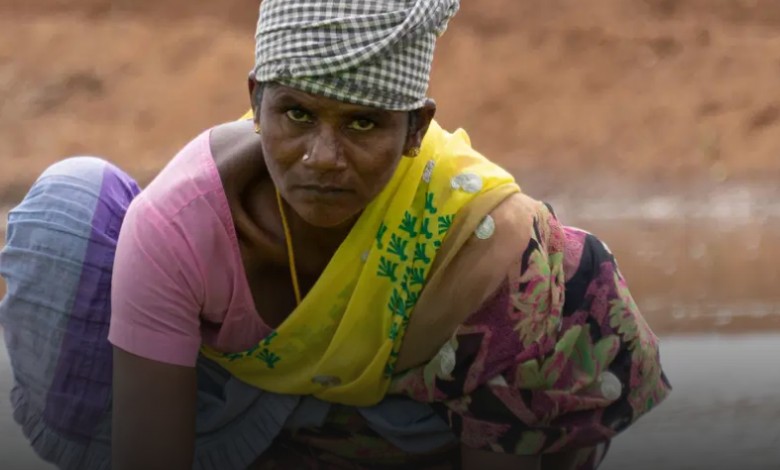
Devi’s day begins at 4 AM, not with the sun, but with a question mark. For twenty years, the rhythm of her life in West Java was dictated by a calendar that no longer exists. The November rains, once the herald of planting, now arrive in October as destructive torrents, or in late December as a drought-breaking whisper that comes too late.
Last year, the calendar lied. The floods drowned her seedlings; the subsequent replanting withered under a scorching sun.
The result of this meteorological chaos is not just a failed harvest statistic in a government report. It is the silence at Devi’s dinner table. It is the substitution of nutrient-dense rice with cheap, filling cassava. It is the lethargy in her eight-year-old daughter, whose blood is slowly being drained of iron. The school nurse calls it anemia. Devi knows it by its true name: Climate Change.
The Great disconnect
We often discuss climate change in the language of degrees, carbon tons, and sea levels. But for the women who produce 50 to 80 percent of the food in the Asia-Pacific region, climate change is a daily arithmetic of scarcity.
The Asian Development Bank reports that climate variability has already slashed yields in vulnerable areas by 10%. That percentage represents millions of metric tons of food. But the global financial apparatus designed to fix this is looking in the wrong direction.
In 2022, the Green Climate Fund approved $1.2 billion for agriculture projects. On paper, this is a triumph. In reality, the money flows into concrete and bureaucracy: massive irrigation dams, research institutes, and national programs.
Where does the money go for the women actually touching the soil?
Less than 10%. According to CGIAR, that is the sliver of climate agriculture funding designed to reach smallholder women farmers.
The Cruelty of “Knowledge Without Capital”
The disconnect is best illustrated by Devi’s experience with “capacity building.” She traveled two hours to a government training session on climate-resilient farming. She learned about drought-resistant seeds and soil health. She returned home educated, but empty-handed.
The system offered her knowledge but withheld the capital to use it. The new seeds cost three times as much as standard varieties. To buy them, she needed a loan. To get a loan, she needed a land title.
Here lies the structural trap: Women in Indonesia own less than 20% of agricultural land, despite doing the majority of the work. Without a title, they have no collateral. Without collateral, they have no credit.
We have built a system that teaches a drowning woman how to swim, but refuses to throw her a life vest because she doesn’t own the pool.
The Hidden Shock Absorbers
When the harvest fails, the financial loss doesn’t distribute potential hunger equally. It targets the mother.
In rural households across Asia, women function as the ultimate shock absorbers for climate disasters. When there isn’t enough food, the hierarchy of survival is brutal and entrenched:
- The husband eats (he needs strength for labor).
- The sons eat (they are the future earners).
- The daughters eat less.
- The mother eats last, and least.
No global audit tracks this. Climate finance reports measure hectares planted, canals built, and dollars deployed. They do not measure the weight lost by women like Devi. They do not measure the anemia rates of village children. Because these metrics are invisible, the failure of the financing remains invisible.
The Path Forward: Financing the Hand, Not the Land
There is a proven alternative. The Asian Development Bank’s Gender Equity Thematic Bond is experimenting with a radical idea: trusting women.
Pilot programs in Cambodia and Vietnam are bypassing the banks and land titles, offering small, direct grants ($200–$500) to women’s farming groups. The results shatter the myth that poor women are “high risk.”
- Adoption: Women invest immediately in what works because they cannot afford to gamble.
- Yields: Recovery is faster than in standard programs.
- Impact: The money converts directly into nutrition for children.
The solution isn’t a mystery; it’s a matter of scale. The International Fund for Agricultural Development (IFAD) estimates that closing this gender gap could pull 100 to 150 million people out of hunger.
A New Metric for Survival
Devi will wake up at 4 AM tomorrow. She will walk to her paddies and she will hope. But hope is not an adaptation strategy. It is what remains when the system has failed you.
source:
https://illuminem.com/illuminemvoices/climate-finance-and-the-meals-we-are-not-counting